Invisible aligners have transformed orthodontic treatment by offering a discreet, comfortable, and effective alternative to traditional braces. Patients seeking straighter teeth often appreciate the convenience of clear aligners and the advanced technology used to create personalized treatment plans.
Before beginning treatment, it is helpful to review our complete guide to invisible aligners in Deira, which explains the benefits, suitability, costs, and long-term care associated with aligner therapy. Understanding the treatment process for invisible aligners allows patients to prepare for each stage of their orthodontic journey and know what to expect throughout treatment.
The treatment process for invisible aligners involves multiple carefully planned steps, from the initial consultation to the final retention phase. Each stage plays an important role in achieving a straighter, healthier, and more confident smile.

Invisible aligners are custom-made transparent trays designed to gradually move teeth into their desired positions. They are created using advanced digital technology and tailored specifically to each patient’s dental needs.
Unlike traditional braces, aligners are removable and nearly invisible, making them a popular choice among teenagers and adults.
The treatment process for invisible aligners is designed to ensure predictable and controlled tooth movement while maintaining patient comfort.
The first stage of the treatment process for invisible aligners is a professional consultation.
During this appointment, the dentist evaluates:
Patients can discuss their concerns, expectations, and desired outcomes.
The consultation helps determine whether invisible aligners are an appropriate treatment option.
Not every orthodontic issue requires the same treatment approach. The dentist assesses whether aligners can effectively address the patient’s alignment concerns.
Modern aligner treatment typically uses advanced digital scanning technology instead of traditional dental impressions.
The scan captures detailed images of:
Additional records may include:
These records form the foundation of the treatment process for invisible aligners.
Digital scanning improves treatment precision and patient comfort while supporting highly accurate aligner fabrication.
One of the most advanced stages in the treatment process for invisible aligners involves digital treatment planning.
Specialized software is used to:
Patients can often view a digital simulation showing how their teeth are expected to move throughout treatment.
This visualization helps patients understand the expected transformation.
Every treatment plan is customized based on individual orthodontic requirements.
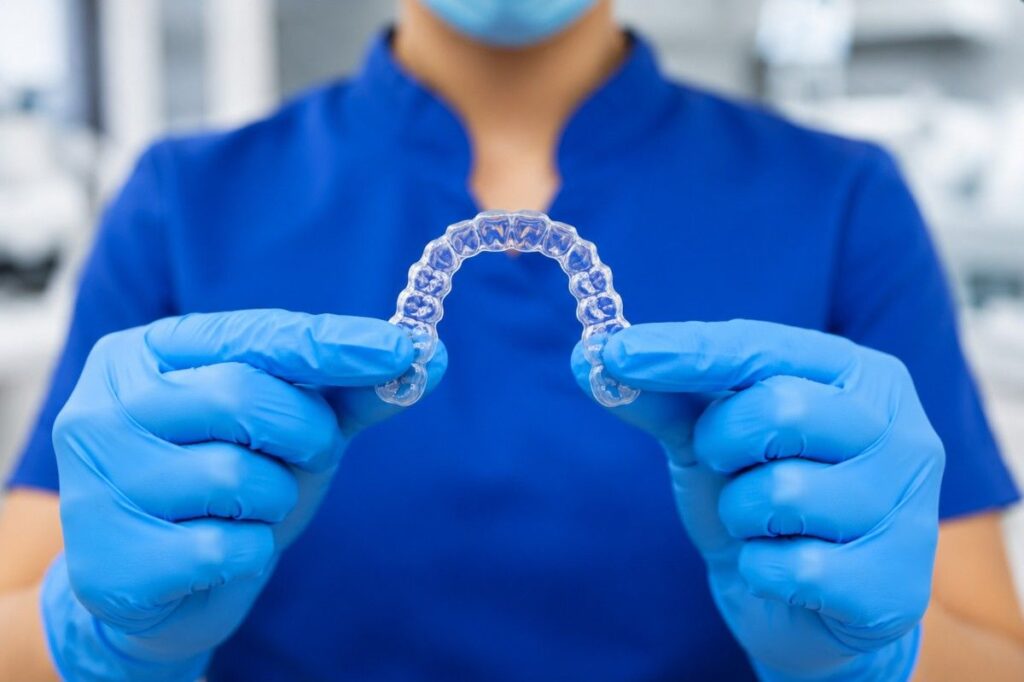
Once the treatment plan is finalized, custom aligners are manufactured.
Each aligner is designed to achieve specific stages of tooth movement.
Modern manufacturing processes ensure that aligners fit comfortably and accurately.
Patients typically receive multiple aligners that are worn in sequence according to the treatment plan.
This stage is an important part of the treatment process for invisible aligners because each tray contributes to gradual tooth movement.
Once the aligners are ready, patients attend an appointment to receive their first set.
The dental team evaluates:
Patients receive guidance regarding:
Most patients are advised to wear aligners for approximately 20 to 22 hours per day.
Consistent wear is essential for successful treatment outcomes.
A crucial stage of the treatment process for invisible aligners involves daily aligner wear.
Patients typically remove aligners only for:
Each aligner applies controlled pressure that gradually moves teeth according to the treatment plan.
Consistent use significantly influences treatment efficiency and final results.
Patients generally change aligners according to professional instructions.
Each new aligner continues the planned tooth movement sequence.
The progression from one aligner to the next allows teeth to move gradually and predictably.
Mild pressure may occur when changing aligners, which often indicates active tooth movement.
This phase is a routine part of the treatment process for invisible aligners.

Periodic appointments help ensure treatment is progressing as planned.
The dental team assesses:
If modifications are needed, adjustments can be incorporated into the treatment plan.
Regular reviews help maintain treatment accuracy and patient confidence.
After completing the planned aligner sequence, a final assessment is performed.
The dentist evaluates:
Most patients reach the alignment improvements outlined in their treatment plan.
This marks the completion of the active treatment process for invisible aligners.
Teeth naturally tend to shift over time.
Retainers help maintain the results achieved through aligner treatment.
The retention phase is one of the most important parts of the treatment process for invisible aligners because it protects the investment made in orthodontic treatment.
Consistent retainer use helps preserve long-term treatment outcomes.
Patients who follow professional instructions often experience several advantages.
Consistent aligner wear supports timely progress.
Following the prescribed schedule helps maintain planned tooth movement.
Proper compliance contributes to achieving desired orthodontic outcomes.
Patients are more likely to be satisfied with treatment when instructions are followed carefully.
Most patients adapt quickly to aligners and continue their normal activities.
The smooth plastic material is generally considered comfortable and less irritating than traditional braces.
Appointment frequency varies based on individual treatment requirements and professional recommendations.
Yes. Treatment duration depends on the complexity of the orthodontic condition and patient compliance.
The treatment process for invisible aligners involves more than simply wearing clear trays.
Professional oversight provides:
This supervision helps maximize safety and effectiveness throughout treatment.
The treatment process for invisible aligners follows a carefully structured pathway designed to deliver predictable, comfortable, and effective orthodontic results. From the initial consultation and digital scanning to aligner wear, progress monitoring, and retention, each stage contributes to successful smile transformation.
Understanding the treatment process for invisible aligners helps patients feel more confident and prepared throughout their orthodontic journey. With proper planning, consistent wear, and professional supervision, invisible aligners can provide an effective solution for achieving a straighter, healthier, and more attractive smile. For additional oral health information, visit the World Health Organization Oral Health Information.
Clear aligners offer a discreet and comfortable alternative to traditional braces for correcting teeth alignment issues. Learn more
Discover how invisible aligners improve smile appearance, comfort, convenience, and oral hygiene during orthodontic treatment. Learn more
Understand which patients may benefit from aligner treatment, including adults, teenagers, and individuals with mild to moderate alignment concerns. Learn more
Treatment costs vary based on the complexity of tooth movement, treatment duration, and individual orthodontic requirements. Learn more
Treatment costs vary based on the complexity of tooth movement, treatment duration, and individual orthodontic requirements. Learn more
Treatment duration depends on the severity of alignment issues, patient compliance, and individual treatment goals. Learn more
Straighten your teeth discreetly with clear, removable invisible aligners for a comfortable treatment experience. Enjoy a confident smile with a nearly invisible orthodontic solution tailored to your needs. Learn More
Proper cleaning, storage, and daily maintenance help keep aligners clear, hygienic, and effective throughout treatment. Learn more
At our clinic, we take pride in our highly skilled and efficient team of dental specialists who are always ready to meet your dental needs.










Dream Smile Dental Clinic
Banyas square, Metro Station, Behind whitefort Hotel, Lilly Centre – Office No: 106, Deira, United Arab Emirates, UAE
WhatsApp us