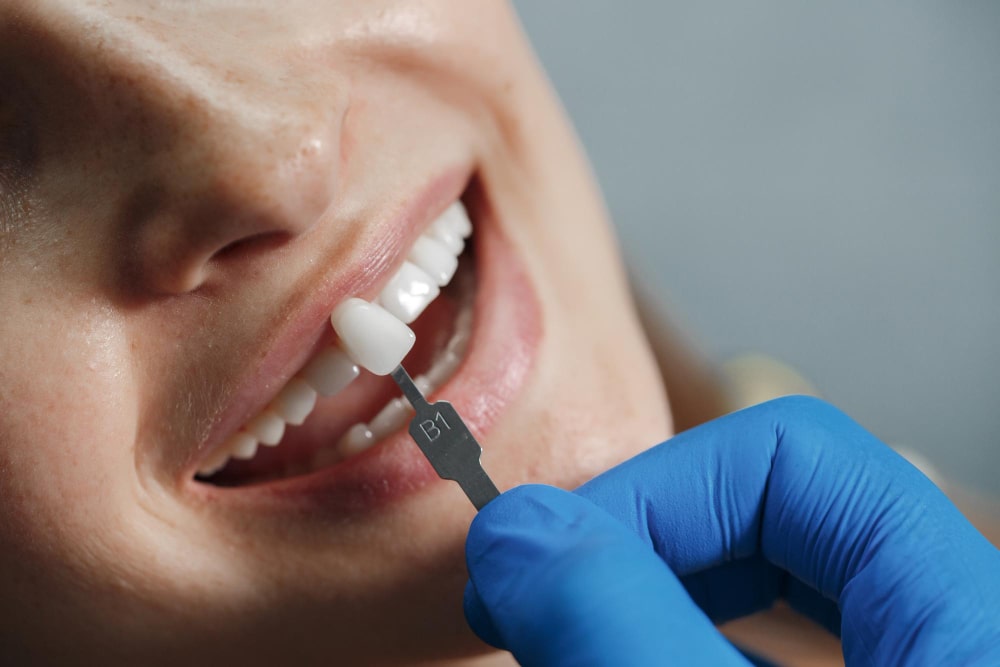
What Are Veneers?

Dental veneers are thin, customized shells made from porcelain or composite resin that are bonded to the front surface of your teeth to improve their appearance. They are one of the most popular cosmetic dentistry treatments worldwide because they can completely transform your smile — making your teeth look whiter, straighter, and more balanced, without the need for major surgery.


Veneers are designed to look exactly like natural teeth. They match the color, shape, and size of your smile while covering imperfections such as discoloration, gaps, cracks, uneven teeth, and minor misalignment. Whether you want a subtle enhancement or a complete Hollywood Smile makeover, veneers provide a long-lasting, beautiful solution.

Why Do People Choose Veneers?

People choose veneers because they want a confident, beautiful smile. A great smile boosts confidence, personality, and self-esteem. Veneers are ideal if you:

  • Feel shy while smiling

  • Have stained or discolored teeth

  • Have gaps between teeth

  • Have broken, chipped, or worn teeth

  • Want a brighter, more attractive smile

  • Want a perfect celebrity-like smile makeover

  • Want a minimally invasive cosmetic solution

Veneers enhance your teeth while preserving the natural structure. Unlike crowns, veneers require minimal tooth preparation, making them a more conservative cosmetic dentistry option.


Problems Veneers Can Fix

Dental veneers can correct a wide range of dental imperfections, including:

Tooth Discoloration

Teeth may become stained due to coffee, tea, smoking, medications, aging, or previous dental work. When teeth whitening is not enough, veneers provide a permanent whitening solution.

Gaps Between Teeth

If you have spaces between your teeth, veneers can close them without braces.

Chipped or Broken Teeth

Minor cracks, chips, or fractures can be covered to restore a flawless appearance.

Uneven or Misshaped Teeth

Some people naturally have uneven or small teeth. Veneers reshape and balance your smile.

Worn-Down Teeth

Grinding or aging can wear down teeth. Veneers rebuild length and structure.

Slightly Crooked Teeth

For mild misalignment, veneers provide instant straightening without orthodontics.

In short, veneers not only beautify your smile — they also improve uniformity and symmetry.


🦷 Types of Veneers

There are mainly two types of veneers:

1️⃣ Porcelain Veneers

Porcelain veneers are the most popular and premium type of veneer. They are thin, highly durable, and closely resemble the natural shine and translucency of enamel.

Benefits of porcelain veneers

  • Natural tooth-like appearance

  • Stain-resistant

  • Long-lasting (10–20 years with care)

  • Strong and durable

  • Biocompatible

2️⃣ Composite Veneers

Composite veneers are made using tooth-colored resin material and are usually done in a single appointment.

Benefits of composite veneers

  • More affordable

  • Faster treatment

  • Easily repairable

  • Less enamel removal compared to porcelain

Your dentist will recommend the best option depending on your tooth condition, budget, and goals.


Frequently Asked Questions

1. What are dental veneers?

Dental veneers are thin shells made of porcelain or composite material placed on the front surface of teeth to improve appearance, color, shape, and alignment.

2. Why do people get veneers?

People choose veneers to fix discoloration, chipped teeth, gaps, uneven teeth, worn teeth, and to achieve a brighter and more confident smile.

3. Do veneers look natural?

Yes, modern veneers are designed to look natural. They closely match your natural tooth shade and blend perfectly with your smile.

4. Are veneers permanent?

Yes, veneers are considered permanent as a small amount of enamel is removed, and they are bonded securely to your teeth.

5. Do veneers hurt?

The veneers procedure is usually painless. Local anesthesia is used during preparation, and most patients experience minimal discomfort.

6. How long do veneers last?

Porcelain veneers can last 10–20 years with proper care, while composite veneers generally last 5–7 years.

7. Can veneers fix gaps or slightly crooked teeth?

Yes, veneers can close gaps and correct minor misalignment, giving your smile a straighter appearance without braces.

8. Can I eat normally with veneers?

Yes, you can eat normally after veneers are placed. However, it's best to avoid biting hard foods, ice, or objects.

9. Do veneers require special care?

No special care is needed. Brush and floss regularly, avoid biting hard objects, and maintain regular dental checkups.

10. Are veneers safe?

Yes, veneers are safe when performed by experienced dentists using high-quality materials and proper techniques.

Table of Contents

Candidate

This section explains who is a suitable candidate for veneers, including people with stained, chipped, uneven, gapped, or slightly misaligned teeth, and the basic oral health conditions required before treatment. Learn more

Consultation

During the consultation for veneers, your dentist examines your teeth, discusses expectations, plans your smile design, selects the veneer shade, and explains the treatment process to ensure the best results. Learn more

Cost

The cost of dental veneers depends on the type of veneer used, the number of teeth treated, the complexity of the case, and the clinic’s expertise and facilities. Learn more

Questions

Before veneers treatment, it is important to ask about suitability, procedure steps, risks, longevity, maintenance requirements, and expected aesthetic outcomes to make an informed decision. Learn more

Risks

Dental veneers can improve smile appearance, but they also involve potential risks such as irreversible enamel removal, sensitivity, damage, and the need for long-term maintenance. Learn more