Braces Procedure Steps: Evaluation, Fitting, Adjustment, and Follow-Up Care
Braces procedure steps follow a structured orthodontic process designed to correct teeth alignment, spacing, and bite issues gradually. The treatment is carefully planned and monitored to ensure safe and controlled tooth movement. In Deira, individuals considering orthodontic treatment often want to understand the exact process before starting braces to feel prepared and confident.
Orthodontic treatment involves multiple stages, beginning with assessment and ending with long-term retention. Each step plays an important role in achieving proper alignment and functional bite correction.
1. Initial Consultation And Oral Examination
The first step involves a detailed dental consultation. The orthodontic evaluation includes checking teeth alignment, spacing, jaw relationship, and bite pattern.
The dental professional assesses oral health conditions such as gum health, cavities, and previous dental work. This helps determine whether braces are suitable and if any preliminary treatments are required.
2. Diagnostic Records And Imaging
Diagnostic tools are used to understand tooth positioning and jaw structure. These may include dental X-rays, photographs, and digital scans or impressions.
These records help in planning the orthodontic treatment and identifying the exact areas that require correction.
3. Treatment Planning
Based on the diagnostic findings, a personalized treatment plan is prepared. This plan includes the type of braces recommended, expected treatment duration, and alignment goals.
The orthodontic strategy is designed to gradually move teeth into proper positions while maintaining oral health.
4. Preparation Of Teeth
Before placing braces, teeth are cleaned and prepared. Any dental issues such as cavities or gum concerns may be addressed to ensure a healthy foundation for orthodontic treatment.
Proper preparation helps prevent complications during braces therapy.
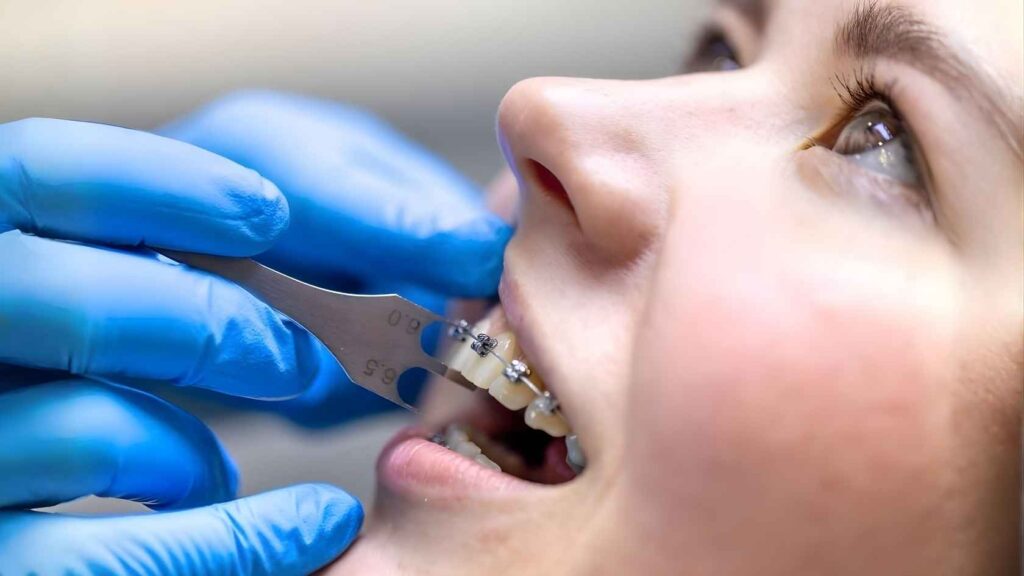
5. Placement Of Brackets
Small brackets are attached to the front surfaces of teeth using a dental adhesive. These brackets act as anchors for guiding tooth movement.
Placement is performed carefully to ensure accurate positioning for effective alignment correction.
6. Insertion Of Archwire
An archwire is placed through the brackets to connect them. This wire applies gentle and continuous pressure to guide tooth movement over time.
The archwire is adjusted periodically to ensure gradual alignment.
7. Securing With Bands Or Clips
Elastic bands or self-ligating clips are used to hold the archwire in place. These components help maintain consistent pressure on teeth and support controlled movement.
The type of securing mechanism depends on the braces system used.
8. Initial Adjustment Period
After braces placement, patients may experience mild discomfort as teeth begin to move. This adjustment phase is temporary and usually settles within a few days.
Soft foods and proper oral care are recommended during this stage.
9. Regular Follow-Up Visits
Orthodontic treatment requires regular monitoring. Follow-up visits allow adjustments to the archwire and evaluation of progress.
These visits ensure that teeth move according to the treatment plan and help prevent complications.
10. Progressive Tooth Alignment
Over time, teeth gradually shift into better positions. Each adjustment helps guide alignment and improve bite function.
The progress depends on treatment complexity, patient compliance, and oral hygiene maintenance.
11. Use Of Elastics If Required
In some cases, elastic bands are used to improve bite alignment and jaw positioning. These elastics are worn as advised and play a role in correcting bite relationships.
Consistency in wearing elastics supports effective treatment progress.
12. Monitoring Oral Health During Treatment
Oral hygiene is essential during braces treatment. Patients are advised to brush carefully around brackets and wires and attend regular dental check-ups.
Maintaining oral health prevents plaque buildup and ensures uninterrupted orthodontic progress.
13. Removal Of Braces
Once the desired alignment is achieved, braces are carefully removed. The brackets and adhesive are taken off, and teeth surfaces are cleaned and polished.
This marks the completion of active orthodontic treatment.
14. Retainer Placement
After braces removal, retainers are provided to maintain the new tooth position. Retainers prevent teeth from shifting back and support long-term stability.
The duration of retainer use depends on individual orthodontic needs.
15. Post-Treatment Monitoring
Periodic reviews are recommended after braces treatment. Monitoring ensures alignment stability and addresses any minor adjustments if required.
Long-term care supports sustained orthodontic results.
Importance Of Following Each Step
Every step in the braces procedure contributes to successful alignment correction. Skipping appointments or not following instructions may affect treatment progress.
Consistency, hygiene, and regular follow-ups are essential for effective orthodontic outcomes.
Duration Of Braces Procedure
The complete orthodontic process varies depending on the severity of misalignment and bite issues. Some individuals may require shorter treatment durations, while complex cases may take longer.
The structured approach ensures gradual and safe movement of teeth.
Patient Preparation And Awareness
Understanding the braces procedure helps reduce anxiety and prepares individuals for treatment stages. Awareness of the process supports better cooperation and improved treatment experience.
Long-Term Benefits Of Braces Treatment
Following the complete braces procedure leads to improved teeth alignment, better bite function, and easier oral hygiene maintenance.
The orthodontic journey supports both functional and aesthetic improvements in dental health in Deira.
Knowing the step-by-step braces procedure allows individuals to make informed decisions and approach orthodontic treatment with confidence and clarity.
Table Of Content
Dental braces treatment
Dental braces treatment is an orthodontic procedure used to correct misaligned teeth and improve bite and overall dental function. Learn more
Consultation
A braces consultation involves dental examination, bite assessment, imaging if required, and planning a suitable orthodontic approach. Learn more
Cost
The cost of braces treatment depends on the type of braces, treatment duration, case complexity, and follow-up care. Learn more
Types
Common types include metal braces, ceramic braces, lingual braces, and clear aligners designed for different alignment needs. Learn more
Before-and-after results
Before-and-after results usually show improved tooth alignment, corrected bite, and enhanced smile appearance. Learn more
Frequently Asked Questions
1. What are the main steps involved in the braces procedure?
The braces procedure includes consultation, diagnosis, treatment planning, bracket placement, adjustments, and retainer use after completion.
2. Is consultation necessary before starting braces treatment?
Yes, consultation helps evaluate alignment, bite, and oral health before planning orthodontic treatment.
3. Are X-rays required during the braces procedure?
X-rays and scans are commonly used to understand tooth position and jaw structure before treatment begins.
4. Does placing braces hurt?
Braces placement is generally comfortable, but mild discomfort may be felt as teeth begin to adjust.
5. How long does the braces procedure take to complete?
The overall procedure duration depends on alignment issues and treatment complexity.
6. How often are follow-up visits required during braces treatment?
Regular follow-ups are scheduled to adjust wires and monitor tooth movement.
7. Why are elastics used during braces treatment?
Elastics help correct bite alignment and improve jaw positioning during orthodontic treatment.
8. What happens after braces are removed?
Retainers are provided to maintain the new tooth position and prevent shifting.
9. Is oral hygiene important during braces treatment?
Yes, proper brushing and cleaning around brackets and wires are essential to prevent dental problems.
10. Can braces procedure steps vary for different patients?
Yes, the steps and treatment duration may vary depending on individual alignment and orthodontic needs.
Our Team of Skilled Dentists In Dubai
At our clinic, we take pride in our highly skilled and efficient team of dental specialists who are always ready to meet your dental needs.