Caring for invisible aligners is an important part of keeping your smile journey clean, comfortable, and effective. In Deira, many patients choose clear aligners because they are removable, discreet, and easier to manage than traditional braces. However, aligners need proper daily care to stay fresh, transparent, and safe for oral health.
Invisible aligners are clear trays made to gently move teeth into better positions. They are worn for most of the day and removed while eating, brushing, and flossing. Because they sit directly over the teeth, poor cleaning habits can lead to stains, bad smell, plaque buildup, and reduced treatment comfort.
This guide explains caring for invisible aligners in simple steps. It covers causes of aligner problems, types of aligner care, warning symptoms, benefits, treatment support, daily tips, and frequently asked questions.
Caring for invisible aligners means keeping the trays, teeth, and gums clean throughout the treatment period. It includes cleaning the aligners every day, storing them safely, avoiding staining habits, and wearing them as instructed by the dentist.
Clear aligners are designed to be almost invisible. But if they are not cleaned properly, they may become cloudy, stained, or unpleasant to wear. Good aligner maintenance helps preserve their clear appearance and supports smoother orthodontic progress.
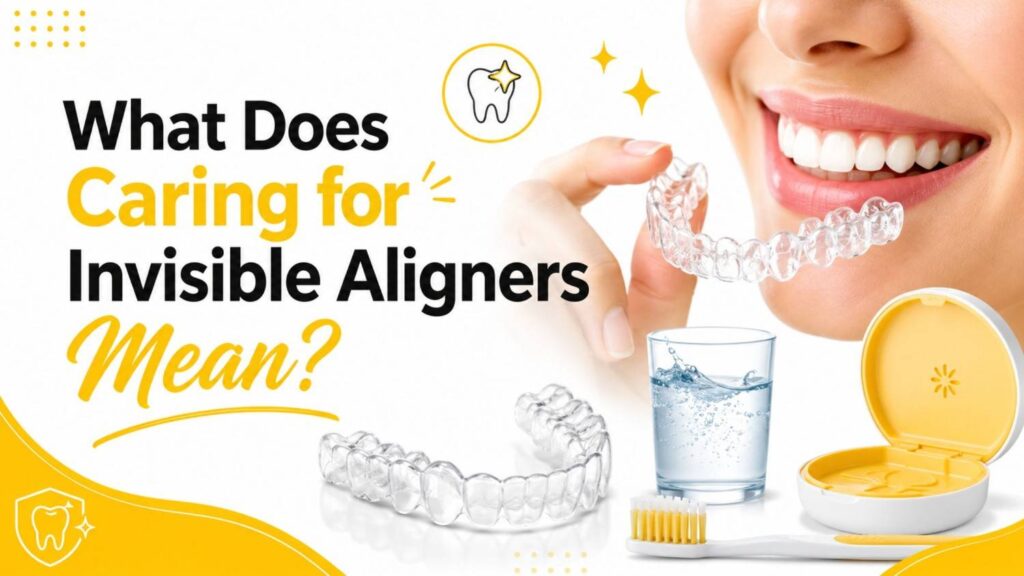
Caring for invisible aligners also protects oral hygiene. Since aligners cover the teeth for long hours, any food particles, sugar, or bacteria trapped inside can affect dental health. That is why cleaning both the teeth and trays is essential.
Invisible aligners work best when they are worn correctly and kept clean. Poor care can affect comfort, hygiene, and even confidence while wearing them.
Proper aligner care helps to:
When patients follow the right care routine, invisible aligners remain easier to wear throughout the day.
Many aligner problems happen because of small daily mistakes. Understanding these causes can help prevent damage and discomfort.
Caring for invisible aligners can be divided into different daily habits. Each type plays a role in keeping treatment clean and effective.
This includes rinsing and cleaning aligners every day. The goal is to remove saliva, plaque, and bacteria before they build up.
Aligners should be stored in a protective case when not in use. This prevents damage, contamination, and accidental loss.
Brushing and flossing are very important during aligner treatment. Clean teeth help keep the aligners cleaner for longer.
Patients should avoid eating with aligners and should remove them before drinking anything other than water, unless advised otherwise.
Most aligner treatments require consistent daily wear. Caring for invisible aligners also means following the recommended wear time and changing trays as instructed.
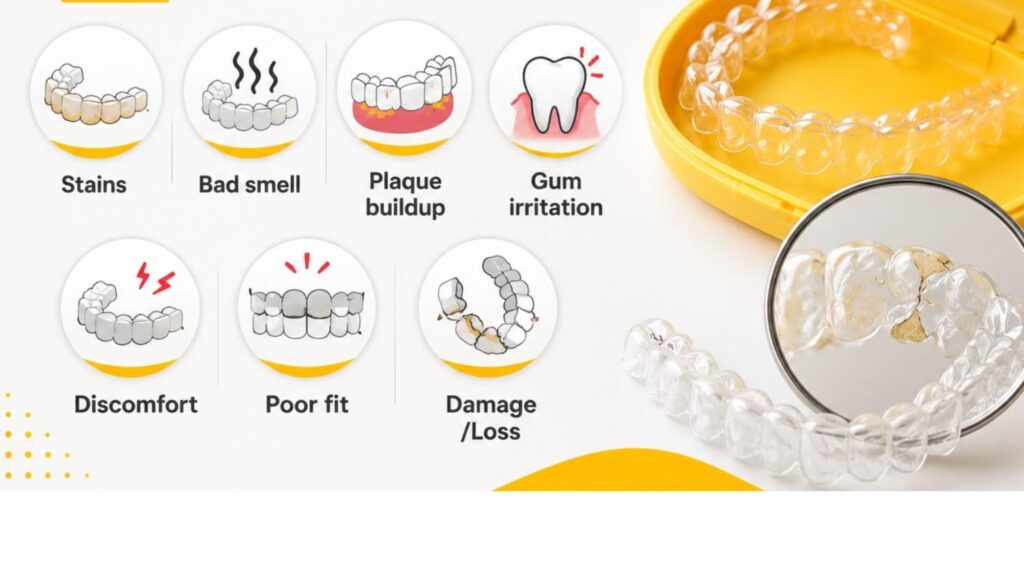
Poor aligner care often shows visible or noticeable signs. Patients should pay attention to these symptoms.
Common signs include:
If these signs appear, it may be time to improve the cleaning routine or speak with a dental professional.
A simple home routine can make aligner care easier. The key is consistency.
After waking up, remove the aligners and rinse them with cool or lukewarm water. Brush your teeth before wearing them again. Clean the trays gently to remove overnight buildup.
Remove aligners before eating. After meals, brush and floss if possible before putting them back. If brushing is not possible immediately, rinse your mouth well and clean properly when you can.
Before sleeping, brush and floss thoroughly. Clean your aligners before wearing them overnight. This helps prevent bacteria buildup during long wear hours.
Following these simple tips can help keep aligners fresh, clear, and safe.
Rinsing helps remove saliva and loose particles. This simple habit prevents buildup and keeps trays feeling fresh.
A soft toothbrush can help clean aligners gently. Avoid hard brushing because it may scratch the surface.
Some toothpastes can be abrasive and may make aligners look cloudy. Use only cleaning methods recommended by your dentist.
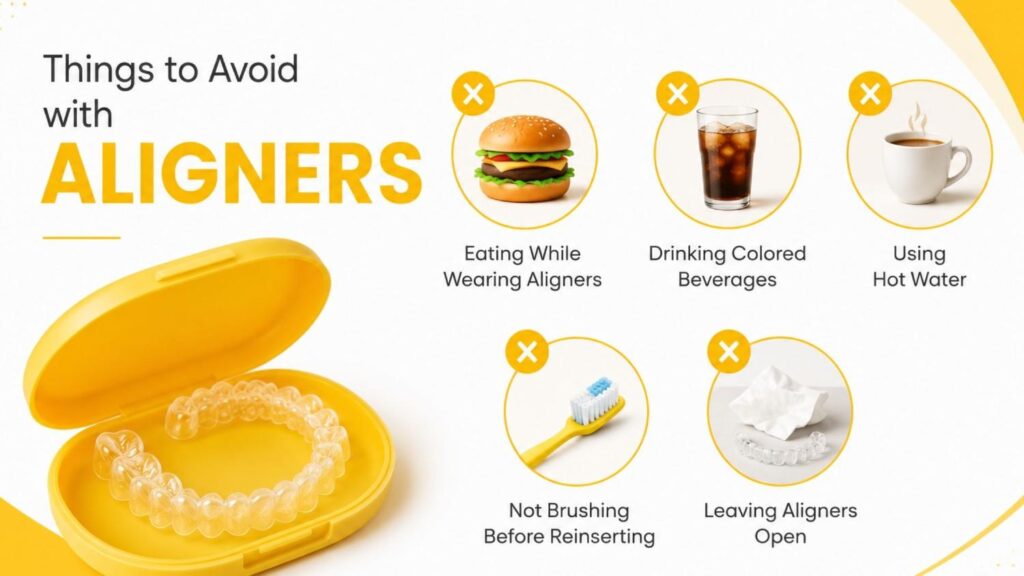
Always avoid hot water. Heat can change the shape of aligners and affect their fit.
Whenever aligners are removed, place them in their case. This protects them from germs, damage, and accidental loss.
Clean teeth help keep aligners clean. Brushing before reinserting aligners is one of the most important habits.
Each patient may have a different treatment plan. Always follow the wear time, cleaning advice, and tray-change schedule given by the dentist.
Aligners should generally be removed while eating. However, it is also important to be careful with drinks.
Avoid wearing aligners while consuming:
Water is usually the safest drink while wearing aligners.
Some habits can reduce the life and clarity of aligners.
Avoid these mistakes:
Small mistakes can lead to bigger problems, so a careful routine is important.
Travel can disturb daily habits, but aligner care should continue.
Carry a small aligner kit with:
When traveling, keep aligners in their case and avoid placing them in napkins or bags without protection.
Fresh aligners improve confidence, especially at work, school, or social events.
Helpful habits include:
Caring for invisible aligners becomes easier when these habits are part of the daily routine.
Aligner care is not only about the trays. Teeth and gums also need attention.
Important oral hygiene steps include:
Healthy teeth help aligner treatment progress more comfortably.
Caring for invisible aligners is essential for keeping trays clean, clear, comfortable, and effective. A simple routine of rinsing, gentle cleaning, brushing before reinsertion, and safe storage can protect both the aligners and oral health.
Invisible aligners are a modern and convenient orthodontic option, but their success depends on proper daily care and consistent wear. By avoiding stains, heat, food damage, and poor hygiene habits, patients can enjoy a smoother treatment experience and maintain confidence throughout their smile journey in Deira.
For additional information about oral health and orthodontic care, visit the World Health Organization Oral Health Information.
Clear aligners offer a discreet and comfortable alternative to traditional braces for correcting teeth alignment issues. Learn more
Discover how invisible aligners improve smile appearance, comfort, convenience, and oral hygiene during orthodontic treatment. Learn more
Understand which patients may benefit from aligner treatment, including adults, teenagers, and individuals with mild to moderate alignment concerns. Learn more
Treatment costs vary based on the complexity of tooth movement, treatment duration, and individual orthodontic requirements. Learn more
Treatment costs vary based on the complexity of tooth movement, treatment duration, and individual orthodontic requirements. Learn more
Explore the step-by-step journey from consultation and digital scanning to aligner delivery and progress monitoring. Learn more
Treatment duration depends on the severity of alignment issues, patient compliance, and individual treatment goals. Learn more
Straighten your teeth discreetly with clear, removable invisible aligners for a comfortable treatment experience. Enjoy a confident smile with a nearly invisible orthodontic solution tailored to your needs. Learn More
At our clinic, we take pride in our highly skilled and efficient team of dental specialists who are always ready to meet your dental needs.










Dream Smile Dental Clinic
Banyas square, Metro Station, Behind whitefort Hotel, Lilly Centre – Office No: 106, Deira, United Arab Emirates, UAE
WhatsApp us