A healthy smile is about more than appearance. Properly aligned teeth play an important role in chewing, speaking, maintaining oral hygiene, and supporting overall dental health. Many people wonder who needs dental braces and whether braces are only for children or teenagers. The truth is that braces can benefit people of different age groups when there are issues affecting the alignment of the teeth or the bite. If you are looking for information about who needs dental braces in Thrissur, understanding the signs and treatment options can help you make informed decisions about orthodontic care.
Braces are orthodontic appliances designed to gradually move teeth into their proper positions. Modern orthodontic treatments have evolved significantly, offering several types of braces that suit different lifestyles and dental needs. Whether the concern is crowded teeth, spacing, bite problems, or jaw alignment, braces may be recommended after a detailed dental evaluation.
Teeth that are properly aligned do much more than improve a smile. They help ensure that the upper and lower jaws function together correctly.
Proper alignment supports:
Poor alignment can gradually affect oral health if left untreated for a long period.
Many people ask who needs dental braces because not every crooked tooth requires orthodontic treatment. Dentists and orthodontists evaluate several factors before recommending braces.
People who may need braces include those with:
The decision depends on the severity of the condition, age, oral health, and long-term dental goals.
Several symptoms may indicate that orthodontic treatment should be considered.
Teeth that grow in different directions may affect both appearance and function.
When there is insufficient space in the jaw, teeth overlap or rotate.
Noticeable spaces may develop naturally or due to missing teeth.
Examples include:
These bite issues may interfere with chewing and jaw movement.
Crowded or overlapping teeth make brushing and flossing more difficult.
Improper alignment sometimes causes accidental cheek or lip biting.
Misaligned bites may contribute to jaw discomfort in some individuals.
When teeth do not meet correctly, certain teeth experience greater pressure than others.
Orthodontic treatment is suitable for many age groups.
Early orthodontic evaluations help identify developing bite problems before they become more severe.
Treatment may address:
Teen years are among the most common periods for braces because permanent teeth have usually erupted.
Treatment can effectively correct:
Many adults also ask who needs dental braces because they assume orthodontic treatment is only for children.
Adult braces may help improve:
Modern orthodontic options are available for adults seeking more discreet treatment.
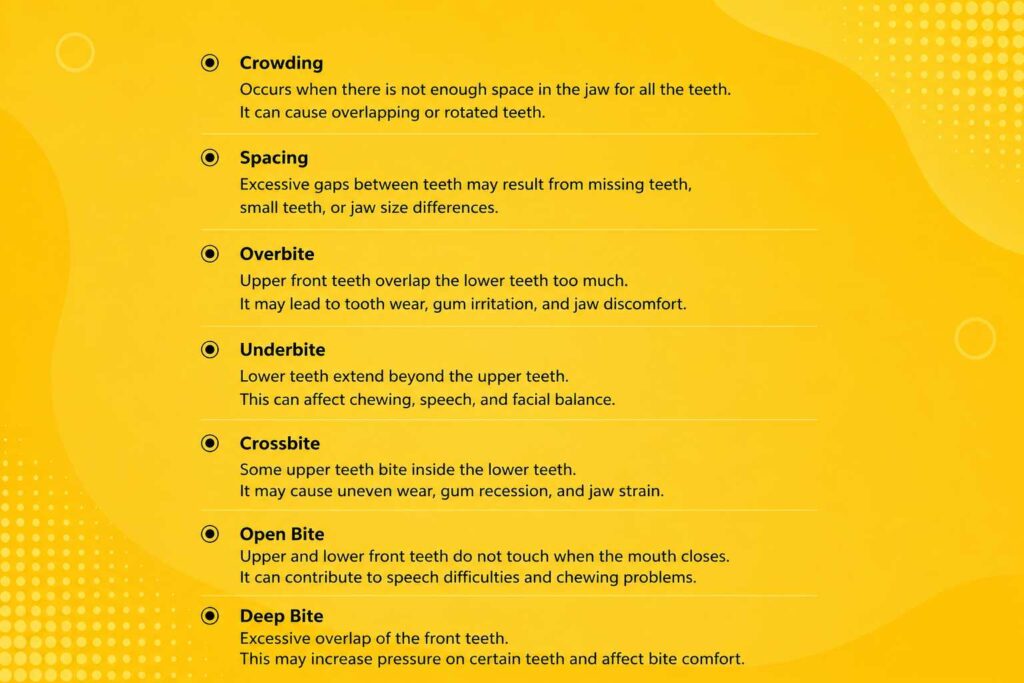
Several orthodontic conditions can benefit from braces.
Occurs when there is not enough space for all teeth.
Possible effects include:
Excessive spaces may occur due to:
Upper front teeth overlap the lower teeth excessively.
Possible concerns:
Lower teeth extend beyond upper teeth.
This may affect:
Some upper teeth bite inside the lower teeth.
Potential issues include:
Upper and lower front teeth do not touch when the mouth closes.
This may contribute to:
Excessive overlap of the front teeth.
This can increase stress on certain teeth.
Understanding the causes helps explain who needs dental braces.
Common causes include:
Some people inherit jaw and tooth size combinations that naturally lead to crowding.
Several orthodontic systems are available today.
These remain one of the most commonly used orthodontic treatments.
Advantages include:
Ceramic braces use tooth-colored brackets.
Benefits include:
These braces use specialized clips instead of elastic bands.
Possible advantages include:
These braces are attached behind the teeth.
Benefits include:
Custom-made removable trays gradually move teeth.
They may be suitable for:
Not every orthodontic condition can be treated using clear aligners.
Understanding the benefits helps explain who needs dental braces beyond cosmetic reasons.
Straight teeth are generally easier to clean.
Proper alignment supports comfortable chewing.
Balanced bite forces help minimize uneven wear.
Correctly aligned teeth allow better cleaning around the gums.
Many patients appreciate the aesthetic improvements.
Certain alignment problems can affect pronunciation.
Correcting bite relationships may improve jaw movement.
Proper alignment supports healthier teeth over time.

Orthodontic treatment usually follows several stages.
The dentist evaluates:
These may include:
A customized orthodontic plan is developed.
Brackets are attached, and wires are placed.
Periodic appointments allow gradual tooth movement.
After treatment, braces are removed.
Retainers help maintain the new tooth positions.
Treatment duration varies depending on:
Many orthodontic treatments may range between 12 and 30 months, although individual cases differ.
Good oral hygiene supports successful treatment.
Helpful habits include:
Some foods may damage braces.
Examples include:
Soft foods are often more comfortable immediately after adjustments.
Maintain healthy teeth by:
Fact: Adults can also benefit from orthodontic treatment.
Fact: They also improve bite function and oral health.
Fact: Mild discomfort may occur after adjustments, but it is usually temporary.
Fact: Every orthodontic treatment plan is customized.
A consultation may be helpful if you notice:
Early assessment may help identify orthodontic concerns before they become more complicated.
Understanding who needs dental braces helps individuals recognize when orthodontic treatment may improve both oral function and smile alignment. Braces are not limited to children or teenagers; adults can also benefit depending on their dental condition. Crowded teeth, spacing, bite issues, jaw alignment concerns, and difficulties maintaining oral hygiene are all situations where braces may be considered. Consulting a qualified dental professional allows for a personalized assessment and treatment plan based on individual needs. If you are considering who needs dental braces and want to learn about suitable treatment options in Dubai, an orthodontic evaluation can provide guidance tailored to your oral health. For reliable information about dental braces and orthodontic care, visit the Cleveland Clinic .
Dream Smile Dental Clinic
Banyas square, Metro Station, Behind whitefort Hotel, Lilly Centre – Office No: 106, Deira, United Arab Emirates, UAE
WhatsApp us