What Are Ceramic Braces? A Complete Guide is a useful starting point for anyone considering a less noticeable way to straighten their teeth. Ceramic braces use clear or tooth-coloured brackets that blend with the natural shade of the teeth. They work in a similar way to traditional metal braces but are generally more discreet.
Many teenagers and adults choose ceramic braces because they want reliable orthodontic correction without highly visible metal brackets. These braces may be used to improve crowded teeth, gaps, crooked teeth, and certain bite problems.
Although ceramic braces offer aesthetic advantages, they require careful cleaning, sensible food choices, and regular orthodontic appointments. This guide explains how ceramic braces work, who may benefit from them, their advantages and limitations, and what patients can expect throughout treatment.
Ceramic braces are fixed orthodontic appliances used to gradually move teeth into improved positions. They consist of brackets attached to the front surface of the teeth, an orthodontic wire, and small elastic or metal components that hold the wire in place.
The main difference between ceramic and conventional braces is the material and appearance of the brackets. Ceramic brackets are usually clear, white, or tooth-coloured. This allows them to blend more naturally with the teeth.
The orthodontic wire may be metallic or coated in a lighter colour to make the appliance less noticeable. However, coated wires may lose some of their colour over time because of normal wear.
Understanding What Are Ceramic Braces? A Complete Guide helps patients recognise that ceramic braces are not removable aligners. They remain fixed to the teeth until the active treatment phase is complete.
Ceramic braces work by applying controlled pressure to the teeth. The orthodontic wire connects the brackets and guides the teeth towards their planned positions.
During regular adjustment appointments, the orthodontist may change the wire, replace elastic components, or modify the pressure being applied. These changes help move the teeth gradually and safely.
Orthodontic movement takes time because the bone and supporting tissues around each tooth must adapt. Teeth cannot be repositioned instantly without causing damage.
The treatment process may involve:
Treatment planning is different for every patient. The amount and direction of tooth movement depend on the individual’s dental condition.
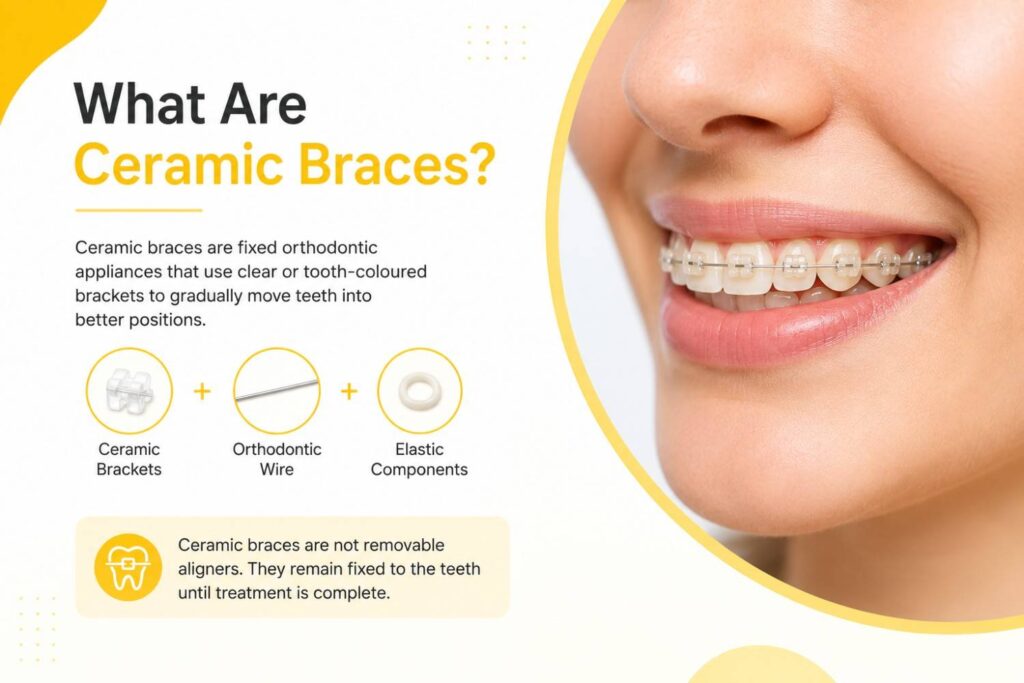
Ceramic brackets are generally made from durable dental ceramic materials. Some are designed to appear translucent, while others match common natural tooth shades.
The brackets must be strong enough to tolerate regular chewing forces and orthodontic pressure. However, ceramic brackets may be more brittle than metal brackets and require careful handling.
The main components include:
These are bonded directly to the tooth surface. Their clear or tooth-coloured appearance makes them less noticeable.
The archwire runs through the brackets and provides the force required to move the teeth.
Small elastic rings may be used to hold the wire inside each bracket. Clear or lightly coloured ties can become stained by strongly pigmented foods and drinks.
Bands may be placed around certain back teeth to provide additional support.
Some patients may require springs, elastics, bite blocks, or other orthodontic components depending on their treatment plan.
Ceramic braces are commonly chosen by people who want fixed orthodontic treatment with a less visible appearance.
Potential candidates may include:
Ceramic braces may not be suitable for everyone. People who play high-contact sports, have significant enamel problems, or require very complex tooth movements may be advised to consider another appliance.
A central part of What Are Ceramic Braces? A Complete Guide is understanding why patients may choose them.
Tooth-coloured or transparent brackets blend with the teeth, making the braces less visible during conversations and photographs.
Ceramic braces use fixed wires and brackets, allowing the orthodontist to control tooth movement throughout treatment.
They may be used for crowding, spacing, crooked teeth, and selected bite concerns.
Unlike removable aligners, ceramic braces remain attached to the teeth. Patients do not need to remember to insert them for a required number of hours each day.
Bracket position, wire selection, and adjustment schedules can be customised according to individual orthodontic needs.
Some patients feel more comfortable wearing ceramic braces because the brackets are less prominent than traditional metal braces.
Correcting tooth alignment and bite relationships may support easier cleaning, chewing, and long-term dental care.
Ceramic braces also have certain limitations that should be considered before treatment.
Ceramic materials and specialised components may make treatment more expensive than conventional metal braces.
Ceramic brackets are strong but may be more brittle than metal. Hard foods and direct impact can cause damage.
The brackets themselves may resist staining, but clear elastic ties can change colour after exposure to coffee, tea, turmeric, tomato sauces, and coloured drinks.
Ceramic brackets create different levels of friction compared with some metal systems. Treatment planning and adjustment must be carefully managed.
Ceramic braces are less noticeable, but the wire and bracket outlines can still be seen at close distance.
At the end of treatment, ceramic brackets must be removed by a dental professional using appropriate techniques.
Ceramic braces and clear aligners are both selected for their discreet appearance, but they work differently.
Ceramic braces are fixed to the teeth. Clear aligners are removable trays that must be worn consistently according to instructions.
Ceramic braces may be preferable when:
Clear aligners may be preferred when removable treatment is appropriate and the patient can follow the required wearing schedule.
A dental assessment is necessary before choosing between these options.
The process begins with a discussion about concerns, expectations, medical history, and previous dental treatment.
The dentist or orthodontist evaluates the teeth, gums, jaw relationship, bite, and oral hygiene.
Records may include:
The collected information is used to determine whether ceramic braces are appropriate and how the teeth should be moved.
Tooth decay, gum inflammation, or other dental problems may need treatment before braces are placed.
The teeth are cleaned and dried before the ceramic brackets are bonded. The orthodontic wire is then placed through the brackets.
Regular appointments allow the orthodontist to monitor movement and make necessary changes.
Once the planned alignment is achieved, the brackets are carefully removed and the tooth surfaces are cleaned.
Retainers are usually required after braces removal to help maintain the new tooth positions.
Treatment duration varies considerably. Some patients may require treatment for around one year, while more complicated orthodontic concerns may take two years or longer.
Factors that can affect treatment time include:
The estimated duration provided at the beginning of treatment is a guide rather than an absolute guarantee.
Hard, sticky, and very crunchy foods can damage brackets and wires.
Foods that may need to be avoided or modified include:
Hard fruits and vegetables can often be eaten after cutting them into small pieces or cooking them until soft.

What Are Ceramic Braces? A Complete Guide explains how tooth-coloured brackets can provide effective orthodontic treatment with a less noticeable appearance. Ceramic braces may help correct crowding, gaps, crooked teeth, and selected bite problems while allowing patients to feel more confident during treatment.
Successful treatment depends on accurate planning, regular orthodontic reviews, good oral hygiene, careful food choices, and consistent retainer use after the braces are removed. A detailed dental examination is the most reliable way to determine whether ceramic braces are suitable for an individual’s teeth, bite, lifestyle, and treatment goals.
To learn more about orthodontic treatment and maintaining good oral health, visit the American Dental Association’s MouthHealthy resource.
At our clinic, we take pride in our highly skilled and efficient team of dental specialists who are always ready to meet your dental needs.










Dream Smile Dental Clinic
Banyas square, Metro Station, Behind whitefort Hotel, Lilly Centre – Office No: 106, Deira, United Arab Emirates, UAE
WhatsApp us