A straight, healthy smile is about more than appearance. Properly aligned teeth can make brushing easier, improve your bite, support better oral health, and boost your confidence. Thanks to modern orthodontic advancements, patients today have several types of dental braces to choose from, each designed to address different alignment needs and lifestyle preferences.
Understanding the types of dental braces available can help you make an informed decision before beginning orthodontic treatment. Whether you are considering braces for yourself or your child, knowing the benefits, limitations, and suitability of each option is the first step toward achieving a healthier smile.
Not all orthodontic cases are the same. Some patients have mild spacing issues, while others require treatment for severe crowding, bite problems, or jaw alignment concerns. This is why understanding the different types of dental braces is essential before starting treatment.
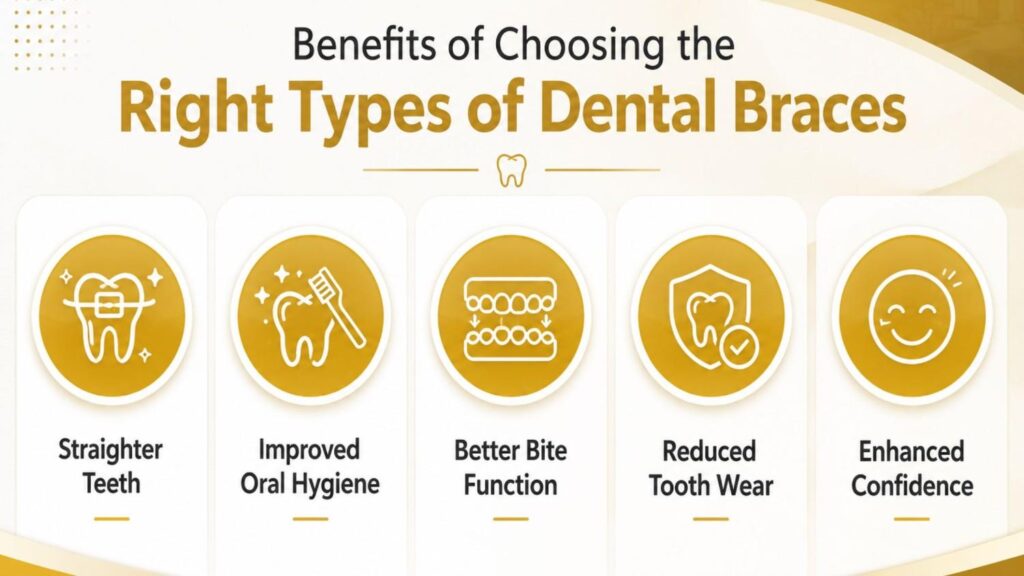
Choosing the right braces can influence:
A professional dental assessment ensures that your orthodontic treatment is tailored to your specific dental condition rather than choosing braces based only on appearance.
Dental braces are orthodontic appliances designed to gradually move teeth into healthier, more balanced positions. They apply gentle and continuous pressure to guide tooth movement over time while allowing the surrounding bone to adapt naturally.
Most braces consist of:
Depending on your dental condition, different types of dental braces may be recommended to achieve the best possible outcome.
Modern orthodontics offers several treatment options suitable for children, teenagers, and adults. Each system has unique advantages, making it important to understand the different types of dental braces before making a decision.
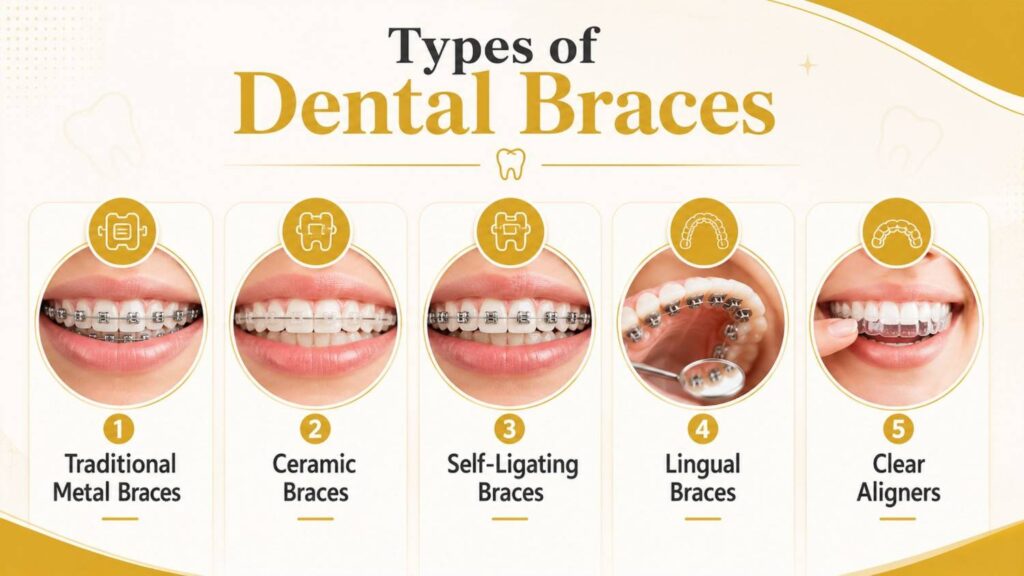
Traditional metal braces remain one of the most effective and widely used orthodontic treatments worldwide.
These braces use stainless steel brackets attached to the teeth and connected with an orthodontic wire. During each follow-up appointment, the dentist adjusts the wire to gradually move the teeth into proper alignment.
Metal braces continue to be one of the most trusted types of dental braces because of their predictable results and ability to treat complex cases.
Ceramic braces function similarly to traditional braces but feature tooth-colored or translucent brackets that blend more naturally with your smile.
They are especially popular among adults and older teenagers looking for a less noticeable orthodontic treatment.
Among the available types of dental braces, ceramic braces offer an excellent balance between effectiveness and aesthetics.
Self-ligating braces are an advanced orthodontic system that eliminates the need for traditional elastic bands. Instead, they use specially designed clips to hold the orthodontic wire securely in place.
These braces are available in both metal and ceramic versions.
Many patients considering modern types of dental braces appreciate self-ligating systems because of their streamlined design.
Lingual braces are placed behind the teeth instead of the front, making them virtually invisible when you smile.
Although they work similarly to conventional braces, they require specialized planning and placement.
For professionals and adults seeking discreet orthodontics, lingual braces are among the most concealed types of dental braces available.
Although technically different from traditional braces, clear aligners are often compared alongside the various types of dental braces because they also straighten teeth.
Clear aligners consist of removable transparent trays that gradually reposition the teeth through a customized treatment plan.
For suitable patients, clear aligners provide an attractive alternative to fixed orthodontic appliances.
Now that you understand the different types of dental braces, choosing the right option depends on factors such as your dental condition, age, lifestyle, and treatment goals. A comprehensive orthodontic consultation can help determine the most suitable solution for your smile. Learn more about our Dental Braces in Dubai services and how our experienced team creates personalized treatment plans for children, teenagers, and adults.
Type | Visibility | Best For | Removable | Suitable for Complex Cases |
|---|---|---|---|---|
| Metal Braces | High | Most orthodontic conditions | No | Yes |
| Ceramic Braces | Moderate | Cosmetic-conscious patients | No | Yes |
| Self-Ligating Braces | Moderate | Many alignment issues | No | Yes |
| Lingual Braces | Very Low | Adults wanting invisible treatment | No | Selected cases |
| Clear Aligners | Very Low | Mild to moderate cases | Yes | Selected cases |
Children often benefit from early orthodontic assessments while their jaws and permanent teeth are still developing.
Depending on the child’s needs, dentists may recommend:
Early treatment may help guide jaw development, reduce severe crowding, and improve bite alignment before problems become more complex.
Parents should remember that not every child requires immediate braces. A professional evaluation helps determine the ideal timing for treatment.
Orthodontic treatment is no longer limited to teenagers. Many adults choose braces to improve their smile, correct bite problems, or prepare for restorative dental procedures.
Adults often prefer:
Before recommending any types of dental braces, the dentist evaluates gum health, bone support, existing restorations, and overall oral health to ensure successful treatment.
Selecting the right orthodontic treatment depends on several important factors.
Complex crowding or bite problems may require fixed braces, while mild cases could be suitable for clear aligners.
Children, teenagers, and adults may benefit from different orthodontic approaches depending on jaw development and treatment goals.
Patients concerned about visibility often prefer ceramic braces, lingual braces, or clear aligners.
Busy professionals may prefer less noticeable treatment options that fit comfortably into their daily routines.
Different orthodontic systems vary in cost. Your dentist can recommend a treatment plan that balances effectiveness and affordability.
Proper maintenance is essential regardless of which types of dental braces you choose.
Helpful tips include:
Consistent care helps ensure successful treatment and minimizes unnecessary delays.
Modern orthodontic treatment is suitable for both teenagers and adults.
Although every orthodontic system aims to move teeth, different types of dental braces offer varying benefits, comfort levels, and treatment approaches.
Patients may experience temporary discomfort after adjustments, but modern orthodontic techniques focus on gradual, controlled tooth movement.
Every smile moves at its own pace. Safe tooth movement requires careful planning and regular monitoring.
Understanding the different types of dental braces is the first step toward choosing an orthodontic treatment that fits your needs, lifestyle, and smile goals. From traditional metal braces to ceramic braces, self-ligating systems, lingual braces, and clear aligners, every option offers unique benefits depending on your dental condition.
The best choice is always one based on a professional assessment rather than appearance alone. For additional information about orthodontic treatment, dental braces, and maintaining good oral health, visit the Oral Health Foundation’s guide.
In some cases, switching between different types of dental braces may be possible, depending on your treatment progress and orthodontic needs. Your dentist will determine whether changing to another orthodontic system is appropriate.
The number of adjustment appointments varies depending on the treatment plan and individual case. Some modern orthodontic systems may require fewer adjustments, but regular follow-up visits remain essential regardless of the type of braces.
Some orthodontic appliances, particularly lingual braces or clear aligners during the initial days, may temporarily affect speech. Most patients adapt quickly as they become accustomed to wearing the appliance.
Yes. Patients wearing any type of dental braces can usually continue participating in sports. Wearing a properly fitted mouthguard is recommended during contact sports to help protect the teeth, braces, and soft tissues.
Hard, sticky, and chewy foods may increase the risk of damaging brackets or wires. Your dentist will provide dietary recommendations based on the type of braces you are wearing.
Patients with braces often benefit from replacing their toothbrush every three months or sooner if the bristles become worn. A soft-bristled toothbrush or orthodontic toothbrush can help clean around brackets more effectively.
Yes. Teeth naturally tend to move over time. Wearing retainers as instructed by your dentist helps maintain the results achieved after orthodontic treatment and reduces the risk of future shifting.
Many patients with crowns, fillings, or other dental restorations can still undergo orthodontic treatment. Your dentist will evaluate your oral health and existing dental work before recommending the most suitable treatment approach.
Professional dental cleanings remain an important part of oral care during orthodontic treatment. Dental hygienists use specialized techniques and instruments to clean around brackets and wires while maintaining healthy teeth and gums.
Dentists evaluate several factors, including tooth alignment, bite relationship, jaw development, oral health, lifestyle, age, and treatment goals. A comprehensive examination helps identify the most appropriate orthodontic solution for each individual.
At our clinic, we take pride in our highly skilled and efficient team of dental specialists who are always ready to meet your dental needs.










Dream Smile Dental Clinic
Banyas square, Metro Station, Behind whitefort Hotel, Lilly Centre – Office No: 106, Deira, United Arab Emirates, UAE
WhatsApp us