Understanding foods to eat and avoid with ceramic braces is an important part of protecting your orthodontic appliances and keeping your treatment on schedule. Patients undergoing orthodontic treatment in Kerala may find that a few simple changes in food preparation can make eating more comfortable while reducing the risk of broken brackets, bent wires, staining, and plaque buildup.
Ceramic braces are designed to blend more naturally with the colour of the teeth. Although their brackets are strong, they can still be damaged by hard, sticky, or excessively crunchy foods. The clear or tooth-coloured components may also become discoloured when frequently exposed to highly pigmented foods and drinks.
Following the right guidance on foods to eat and avoid with ceramic braces does not mean giving up every food you enjoy. It mainly involves selecting softer alternatives, cutting food into smaller portions, chewing carefully, and maintaining good oral hygiene after meals.
Ceramic braces gradually move the teeth by applying controlled pressure through brackets, wires, and elastic components. These appliances remain attached to the teeth throughout treatment, making them vulnerable to sudden force.
Biting directly into a hard food can loosen a bracket. Sticky food may pull on the wire, while small food particles can become trapped around the appliance. Understanding foods to eat and avoid with ceramic braces can therefore support smoother and more comfortable treatment.
A braces-friendly diet can help:
Knowing what causes damage makes it easier to understand the importance of foods to eat and avoid with ceramic braces.
Hard foods can place excessive pressure on ceramic brackets. Ice, hard sweets, uncut raw vegetables, and hard nuts may loosen or crack an orthodontic component.
Sticky sweets can attach to brackets and wires. They may be difficult to remove and can pull at the braces while chewing.
Biting into whole apples, crusty bread, corn on the cob, or hard sandwiches may place direct pressure on the front brackets.
Ceramic brackets are generally resistant to staining, but clear elastic ties placed around them may absorb pigments from certain foods and drinks.
Food particles trapped around braces can contribute to plaque buildup, bad breath, tooth decay, and gum irritation.
The best foods to eat and avoid with ceramic braces can be organised according to texture, preparation method, nutritional value, and staining potential.
Soft foods require less chewing pressure and are especially helpful during the first few days after braces placement or adjustment.
Examples include:
Protein supports general health and tissue maintenance. Choose protein sources that can be chewed without placing excessive force on the braces.
Suitable options include:
Fruits can remain part of a balanced diet, but hard fruits should be sliced or softened before eating.
Braces-friendly fruits include:
Raw carrots and other firm vegetables may be difficult to bite. Cooking them until soft makes them safer and more comfortable.
Suitable vegetables include:
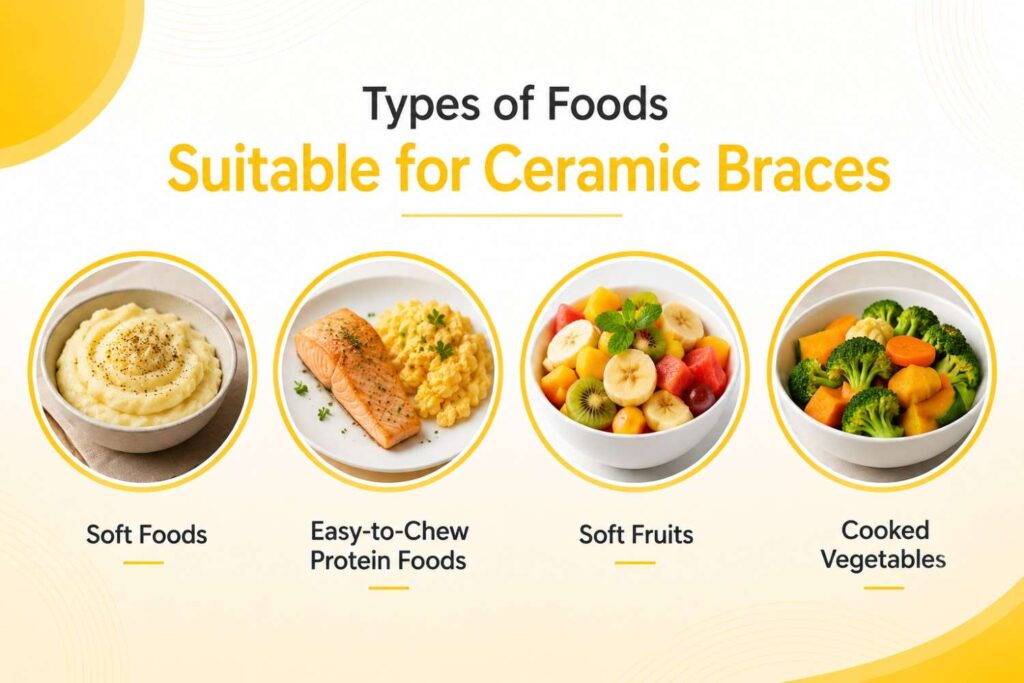
Yogurt is soft, easy to eat, and requires very little chewing. Plain or low-sugar yogurt may be chosen to reduce unnecessary sugar exposure.
Scrambled eggs provide protein and have a soft texture. They are especially useful after orthodontic adjustments when the teeth may feel sensitive.
Properly cooked rice can be eaten comfortably with ceramic braces. It may be combined with soft vegetables, lentils, fish, or tender meat.
Oatmeal is filling and gentle on sensitive teeth. Avoid adding hard nuts or sticky toppings.
Mashed potatoes are easy to chew and can be included with soft protein and cooked vegetables for a balanced meal.
Vegetable, chicken, lentil, or pumpkin soups can provide nourishment without requiring heavy chewing. Allow hot soup to cool before eating.
Well-cooked boneless fish is a suitable protein option. Check carefully for small bones before eating.
Bananas are naturally soft and can be eaten whole in small bites or added to yogurt, oatmeal, and smoothies.
Cook pasta until tender and choose sauces that are not excessively sticky or highly pigmented.
Steaming, boiling, or roasting vegetables until tender reduces the pressure required to chew them.
Soft paneer and tofu are useful vegetarian protein choices. They can be cut into small pieces and added to mild curries, soups, and rice dishes.
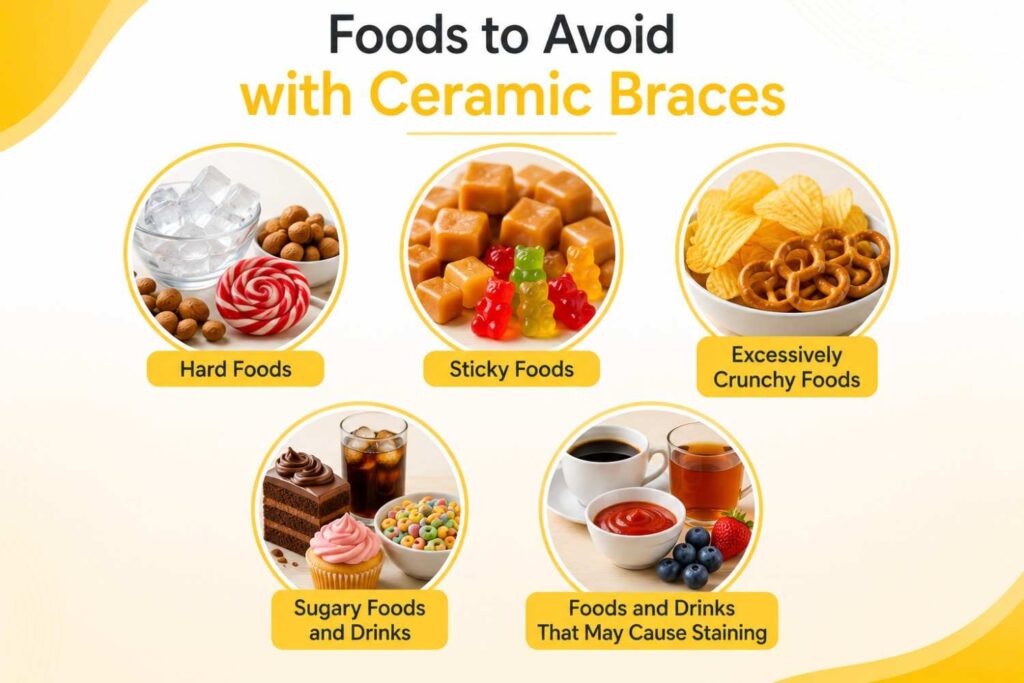
An important part of understanding foods to eat and avoid with ceramic braces is recognising foods that could damage or stain the appliance.
Avoid biting directly into:
Apples and carrots may still be eaten when sliced into small, thin pieces or cooked until soft.
Sticky foods can pull on brackets and become trapped around the wires.
Examples include:
Crunchy snacks may create sudden pressure against the ceramic brackets.
Limit or avoid:
Sugar is not always a direct cause of bracket damage, but frequent sugar exposure can increase plaque and tooth decay around the brackets.
Limit:
Foods and Drinks That May Cause Staining
The ceramic bracket itself may resist stains, but elastic ties can become discoloured.
Common staining items include:
These foods do not always need to be completely eliminated. Moderate consumption, drinking water afterward, and cleaning the teeth properly can help reduce staining.
Even when following guidance on foods to eat and avoid with ceramic braces, occasional problems can occur.
Contact your dental clinic when you notice:
Do not pull, bend, or remove a loose component without professional guidance.
A damaged orthodontic component should be assessed by a dental professional. The appropriate treatment depends on the type and location of the damage.
Treatment may involve:
While waiting for an appointment, orthodontic wax may help cover a sharp area. Follow instructions provided by the dental clinic and avoid attempting permanent repairs at home.
Understanding foods to eat and avoid with ceramic braces can help protect brackets, reduce staining, improve comfort, and support steady orthodontic progress. Choose soft and nutritious meals, prepare harder ingredients in smaller pieces, avoid sticky snacks, and clean carefully after eating.
Your orthodontic professional may provide additional instructions based on your appliance, dental condition, and treatment stage. Patients receiving ceramic braces care in Kerala should follow their personalised dietary and oral hygiene guidance throughout treatment. By making thoughtful food choices, foods to eat and avoid with ceramic braces become easier to manage as part of everyday life.
To learn more about orthodontic treatment and maintaining good oral health, visit the American Dental Association’s MouthHealthy resource.
At our clinic, we take pride in our highly skilled and efficient team of dental specialists who are always ready to meet your dental needs.








Dream Smile Dental Clinic
Banyas square, Metro Station, Behind whitefort Hotel, Lilly Centre – Office No: 106, Deira, United Arab Emirates, UAE
WhatsApp us