Choosing braces is an important step towards improving tooth alignment, bite function, oral hygiene, and smile confidence. However, many patients find themselves asking one common question: CERAMIC BRACES VS METAL BRACES: WHICH IS BETTER? Both options use brackets and wires to move teeth gradually, but they differ in appearance, strength, cost, maintenance, and suitability.
Ceramic braces use clear or tooth-coloured brackets designed to blend with the natural shade of the teeth, while traditional braces use highly durable stainless-steel brackets. Both can provide predictable orthodontic correction when treatment is properly planned and monitored.
Ceramic braces are fixed orthodontic appliances that use clear, white, or tooth-coloured brackets. An orthodontic wire passes through these brackets and applies controlled pressure to move the teeth into healthier positions.
They work on the same basic principle as conventional braces. The main difference is their appearance. Because the brackets are less noticeable, ceramic braces are popular among adults, working professionals, college students, and teenagers who prefer a more discreet treatment.
Modern ceramic brackets are designed to resist staining and remain stable throughout treatment. However, the elastic ties used around some brackets may become discoloured if they are frequently exposed to strongly coloured food or drinks.
Ceramic braces may be used to correct:
Metal braces are traditional fixed orthodontic appliances made with stainless-steel brackets, archwires, and elastic components. They are widely used because they are strong, efficient, reliable, and suitable for a broad range of orthodontic conditions.
The brackets are attached to the front surface of the teeth. The archwire is placed through them, and small adjustments are made during follow-up appointments. These adjustments gradually guide the teeth towards their planned positions.
Modern metal braces are smaller and more comfortable than older designs. Patients may also choose coloured elastic bands, making them especially popular among children and teenagers.
Metal braces can treat:
Appearance is one of the biggest differences between these orthodontic options.
Ceramic brackets are designed to blend with the natural tooth shade. Some are clear, while others are made in different tooth-coloured shades. This makes them less visible in photographs, meetings, classrooms, and social situations.
Metal braces have silver-coloured brackets and wires that are more noticeable. Some patients enjoy personalising them with colourful elastic bands, while others may prefer a subtler orthodontic appliance.
When comparing CERAMIC BRACES VS METAL BRACES: WHICH IS BETTER for appearance, ceramic braces are usually the preferred option. They offer a more discreet look without relying on removable aligners.
However, ceramic braces are not completely invisible. The archwire and elastic ties may still be noticeable at close range.

A professional orthodontic examination is the most reliable way to determine whether braces are needed. However, certain signs may indicate that an assessment would be helpful.
These include:
These symptoms do not automatically mean that braces are necessary. Your dentist or orthodontist must examine your teeth, gums, bite, and jaw relationship before recommending treatment.
Understanding the available types can make the comparison easier.
These use ceramic brackets with elastic ties that hold the wire in place. They are discreet and commonly recommended for patients concerned about visible metal brackets.
Self-ligating brackets use a built-in clip instead of separate elastic ties. This may reduce discolouration around the bracket, although suitability depends on the treatment plan.
These use stainless-steel brackets with elastic ties. They are widely available, highly durable, and suitable for most orthodontic conditions.
These contain a small built-in mechanism that holds the archwire. They may make wire changes simpler, but they are not automatically faster or better for every patient.
Metal braces can be personalised using coloured ties. This option is especially appealing to younger patients who want to make treatment more enjoyable.
Both ceramic and metal braces can move teeth effectively. The success of treatment depends more on diagnosis, orthodontic planning, patient cooperation, oral hygiene, follow-up attendance, and the complexity of the condition than on bracket colour.
Metal braces are often recommended for extensive tooth movement or complex bite correction because the brackets are highly durable and can tolerate greater forces.
Ceramic braces can treat many of the same alignment concerns. However, orthodontists may use lighter or more controlled forces in certain cases because ceramic material behaves differently from metal.
For mild or moderate crowding, spacing, and bite concerns, both options may produce excellent results.
When considering CERAMIC BRACES VS METAL BRACES: WHICH IS BETTER for effectiveness, the answer depends on the individual treatment plan. Metal braces may have an advantage for highly complex cases, while ceramic braces are effective for many routine and advanced alignment needs.
Both types can cause temporary pressure or tenderness after placement and adjustment appointments. This discomfort is related mainly to tooth movement rather than the bracket material.
Ceramic brackets may feel smoother to some patients because their edges are often rounded. However, ceramic brackets can be slightly larger than metal brackets, which may take time to get used to.
Metal brackets are usually smaller but may initially irritate the lips or cheeks. Orthodontic wax can be placed over any area causing friction.
Common temporary experiences include:
These effects usually become manageable as the mouth adapts.
Metal braces are stronger and more resistant to cracking or chipping. This makes them suitable for children, active teenagers, contact-sport participants, and patients requiring significant orthodontic force.
Ceramic brackets are durable but may be more brittle than metal. Biting hard objects or eating unsuitable foods can damage them. Patients must be careful with ice, hard sweets, pens, nuts, and crunchy food.
Metal brackets are also easier to remove at the end of treatment. Ceramic bracket removal requires careful technique because the material is harder than tooth enamel and must be handled appropriately.
In the durability comparison of CERAMIC BRACES VS METAL BRACES: WHICH IS BETTER, metal braces generally have the advantage.
The ceramic material itself is usually resistant to staining. However, clear or white elastic ties may absorb colour from certain foods and drinks.
Items that may contribute to discolouration include:
Regular cleaning and changing the elastic ties during adjustment visits can help maintain a neat appearance.
Metal brackets do not stain, although food and plaque can still collect around them. Proper brushing is equally important for both systems.
Braces create small spaces where food particles and plaque can collect. Poor cleaning may increase the risk of tooth decay, gum inflammation, bad breath, and white marks on the enamel.
Patients with either type should:
Ceramic brackets can make plaque less visible because they blend with the teeth. This makes careful cleaning particularly important.
Food precautions are similar for ceramic and metal braces, although extra care may be required with ceramic brackets.
Avoid or limit:
Softer choices include:
Cut firm foods into smaller pieces and chew carefully using the back teeth.
Treatment duration depends on the severity of the alignment concern, the number of teeth requiring movement, bite correction, age, jaw development, appointment attendance, and bracket care.
Many treatments take approximately 12 to 24 months, although some may be shorter or longer. Ceramic braces do not always take longer than metal braces, but certain complex movements may progress more efficiently with metal brackets.
Broken brackets, missed appointments, poor elastic wear, and inadequate oral hygiene can delay treatment with either option.
Therefore, the question CERAMIC BRACES VS METAL BRACES: WHICH IS BETTER should not be answered based only on assumed treatment speed.
Ceramic braces generally cost more than metal braces. Ceramic brackets are more expensive to manufacture and may require additional time and care during placement, adjustment, and removal.
The total price may depend on:
Some patients choose ceramic brackets only on the upper front teeth and metal brackets on less visible teeth. This may provide a balance between appearance, strength, and cost.
Patients should request a complete treatment estimate rather than choosing braces based only on the starting price.
Ceramic braces offer several advantages:
The main appeal is the combination of fixed-brace effectiveness and improved aesthetics.
Metal braces also provide important benefits:
For patients focused mainly on strength, efficiency, and affordability, metal braces may be the more practical choice.
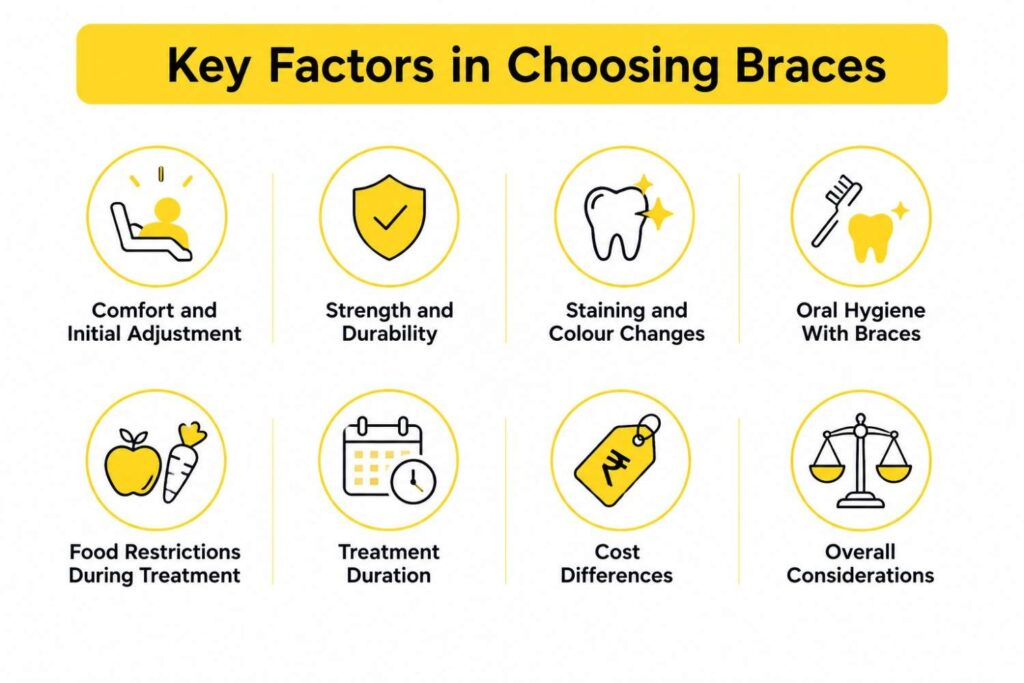
When deciding CERAMIC BRACES VS METAL BRACES: WHICH IS BETTER, consider the following points.
Choose ceramic brackets when a discreet appearance is a major priority. Choose metal braces when visibility is not a concern.
Ask whether both systems are clinically suitable for your bite and tooth movement requirements.
Request a written estimate covering records, appointments, braces, emergency repairs, removal, and retainers.
Ceramic braces may require greater attention to foods and drinks that can discolour elastic ties.
Durable metal brackets may be practical for younger or highly active patients.
Ask whether bracket choice is expected to affect the planned timeline in your particular case.
Both options require excellent oral hygiene. Choose the system you feel confident maintaining properly.
Both options may be suitable for teenagers. Metal braces are often chosen because they are strong, cost-effective, and can be customised with coloured elastics.
Ceramic braces may appeal to teenagers who are concerned about appearance at school, in photographs, or during social activities. However, the patient must be responsible enough to follow food restrictions and cleaning instructions.
The orthodontist may recommend metal braces when treatment requires extensive movement or when there is a high risk of bracket breakage.
Adults often prefer ceramic braces because they are less noticeable in professional and social environments. They provide a discreet fixed option for patients who may not be suitable for removable clear aligners.
Metal braces remain a strong choice for adults who prioritise affordability, durability, and efficient correction of complex conditions.
Age alone does not determine suitability. Gum health, bone support, tooth condition, previous dental treatment, and alignment complexity are more important.
So, CERAMIC BRACES VS METAL BRACES: WHICH IS BETTER? Ceramic braces may be better for patients who want a less noticeable fixed treatment and are comfortable with a higher cost and careful maintenance. Metal braces may be better for patients who value strength, affordability, smaller brackets, and suitability for complex correction.
Neither option is automatically best for everyone. Both can improve tooth alignment, bite function, oral hygiene access, and smile balance when used in the right case. A detailed orthodontic examination remains the safest way to decide CERAMIC BRACES VS METAL BRACES: WHICH IS BETTER for your individual dental needs.To learn more about orthodontic treatment and maintaining good oral health, visit the American Dental Association’s MouthHealthy resource.
At our clinic, we take pride in our highly skilled and efficient team of dental specialists who are always ready to meet your dental needs.










Dream Smile Dental Clinic
Banyas square, Metro Station, Behind whitefort Hotel, Lilly Centre – Office No: 106, Deira, United Arab Emirates, UAE
WhatsApp us