Braces Treatment Time Period: How Long Does It Take to Straighten Your Teeth?
A healthy, well-aligned smile doesn’t happen overnight. One of the most common questions patients ask before starting orthodontic care is about the Braces Treatment Time Period. While everyone hopes for quick results, the duration of braces treatment depends on several factors, including the complexity of the case, the type of braces used, age, and how well patients follow their dentist’s instructions.
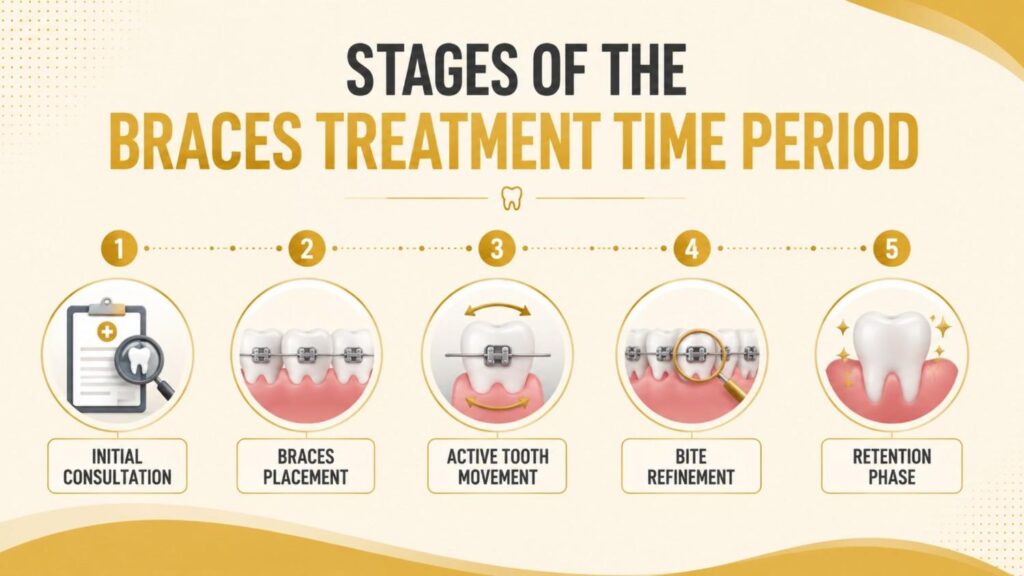
Understanding the Braces Treatment Time Period helps set realistic expectations and prepares you for each stage of your orthodontic journey. Whether you’re considering braces for yourself or your child, knowing what influences treatment duration can make the process smoother and more rewarding.
Why Does the Braces Treatment Time Period Vary?
No two smiles are exactly alike. Some patients require only minor alignment corrections, while others need comprehensive treatment to correct crowding, spacing, or bite problems.
Several factors influence the Braces Treatment Time Period, including:
Severity of tooth misalignment
Bite correction requirements
Age of the patient
Type of orthodontic appliance
Bone response to tooth movement
Oral hygiene during treatment
Attendance at adjustment appointments
Patient cooperation with elastics or aligners
Because every orthodontic case is unique, your dentist will provide an estimated timeline after a thorough examination.
Average Braces Treatment Time Period
Although treatment times vary, most orthodontic treatments fall within a general timeframe.
Orthodontic Condition
Estimated Treatment Time
Minor alignment issues
6–12 months
Moderate crowding or spacing
12–18 months
Complex bite correction
18–24 months
Severe orthodontic cases
24 months or longer
Factors That Affect the Braces Treatment Time Period
Severity of Dental Problems
Patients with significant crowding, large gaps, or complex bite issues often require a longer Braces Treatment Time Period than those with minor cosmetic corrections.
Type of Braces
Different orthodontic systems work in different ways.
Treatment may involve:
Traditional metal braces
Ceramic braces
Self-ligating braces
Lingual braces
Clear aligners
The most suitable option depends on your dental condition rather than treatment speed alone.
Age
Children and teenagers often experience faster tooth movement because their jaws are still developing. Adults can also achieve excellent orthodontic results, although the Braces Treatment Time Period may sometimes be slightly longer depending on bone density and oral health.
Patient Cooperation
Following your dentist’s instructions plays an important role in treatment success.
Patients who:
Attend every appointment
Wear prescribed elastics
Clean their braces properly
Avoid damaging foods
are less likely to experience unnecessary treatment delays.
Can the Braces Treatment Time Period Be Shortened?
Although orthodontic treatment follows a biological process that cannot be rushed, patients can help avoid unnecessary delays.
Helpful habits include:
Maintaining excellent oral hygiene
Attending every scheduled appointment
Wearing elastics exactly as instructed
Avoiding foods that can damage brackets
Reporting broken wires or brackets promptly
Following all aftercare instructions
Consistent cooperation allows treatment to progress as planned.
What Can Delay the Braces Treatment Time Period?
Several factors may extend orthodontic treatment.
Common causes include:
Missed appointments
Broken brackets
Poor oral hygiene
Not wearing elastics
Damaged orthodontic appliances
Untreated dental problems
Delayed healing or tooth movement
Understanding these factors helps patients stay committed to their treatment plan.
Life During Your Braces Treatment Time Period
Daily life with braces becomes easier after the initial adjustment period.
Patients are encouraged to:
Brush after meals
Floss carefully around brackets
Choose braces-friendly foods
Wear a mouthguard during sports
Visit their dentist for routine check-ups
Good habits help protect both your braces and overall oral health throughout the Braces Treatment Time Period.
Choosing the Right Orthodontic Treatment
The length of treatment is important, but choosing the right orthodontic solution matters even more.
A professional orthodontic consultation helps determine:
The best treatment option
Expected treatment duration
Oral health requirements
Personalized care recommendations
If you’re considering orthodontic treatment, explore our Dental Braces in Dubai services.
Conclusion
The Braces Treatment Time Period varies from person to person because every smile has unique orthodontic needs. Factors such as the severity of misalignment, type of braces, patient age, and commitment to treatment all influence how long orthodontic care takes.
Rather than focusing only on speed, it’s important to choose a treatment plan that delivers safe, predictable, and long-lasting results. Whether your treatment lasts several months or a couple of years, staying consistent with appointments and following your dentist’s guidance can help you achieve the best possible outcome. For additional information about braces treatment, orthodontic care, and what to expect during your treatment journey, visit the Oral Health Foundation.
Frequently Asked Questions
1. Does the type of braces affect the treatment time period?
Yes. Different orthodontic appliances may have varying treatment approaches, but the overall treatment time depends primarily on the complexity of your dental condition and your individual treatment plan.
2. Can poor oral hygiene increase the braces treatment time period?
Yes. Poor oral hygiene can lead to dental issues such as gum inflammation or tooth decay, which may require treatment before orthodontic care can continue, potentially extending the treatment period.
3. Is the braces treatment time period the same for every patient?
No. Every patient's teeth, bite, jaw structure, and orthodontic needs are different, so treatment duration varies from person to person.
4. How often are adjustment appointments scheduled during braces treatment?
Most patients visit their dentist or orthodontist every 4 to 8 weeks for adjustments, although the schedule may vary depending on the treatment plan and progress.
5. Can broken brackets or wires delay braces treatment?
Yes. Damaged brackets, loose wires, or other appliance issues can interrupt tooth movement and may increase the overall braces treatment time period if they are not repaired promptly.
6. Does wearing retainers after braces affect the overall treatment journey?
Yes. Although retainers are worn after active braces treatment is complete, they are an important part of maintaining the results and preventing teeth from shifting back to their previous positions.
7. Can teeth continue moving after braces are removed?
Yes. Teeth naturally tend to shift over time. Following your dentist's retainer instructions helps maintain your new smile and supports long-term orthodontic success.
8. Is discomfort normal during the braces treatment time period?
Mild discomfort or pressure is common after braces are placed or adjusted. This usually improves within a few days as your teeth begin adapting to the gentle orthodontic forces.
9. Why is regular follow-up important during braces treatment?
Routine appointments allow your dentist to monitor tooth movement, make necessary adjustments, and ensure your treatment is progressing safely and efficiently.
10. When will I start noticing results during braces treatment?
Many patients begin noticing gradual improvements in tooth alignment within the first few months. However, visible progress varies depending on the complexity of the case and the planned braces treatment time period.
Our Team of Skilled Dentists In Dubai
At our clinic, we take pride in our highly skilled and efficient team of dental specialists who are always ready to meet your dental needs.