Looking at braces before and after results can help people understand what orthodontic treatment may achieve over time. When teeth are crowded, spaced, rotated, or unevenly positioned, braces can gradually guide them toward a more organised alignment. The difference between the starting smile and the completed result can be noticeable, but the transformation does not happen overnight.
For patients considering orthodontic treatment, braces before and after photos can be useful for setting realistic expectations. They show how tooth positions may change during treatment and help explain why orthodontic care is usually a gradual process. However, every smile is different, so one person’s result cannot be used as a guarantee for another patient.
At Dream Smile Dental Clinic in Dubai, orthodontic treatment begins with an assessment of the patient’s teeth, bite, gums, and individual needs. The clinic’s main braces guide explains the different orthodontic options available and how treatment is planned. This supporting guide focuses specifically on understanding braces before and after changes and what patients should look for when comparing results.
The phrase braces before and after refers to a comparison between the position of the teeth before orthodontic treatment and their position after the active treatment phase.
The “before” stage establishes the starting condition. Teeth may appear:
The “after” stage shows the alignment achieved after the orthodontic plan has been completed.
A braces before and after comparison therefore provides a visual representation of change. It can show how individual teeth have moved and how the overall smile has become more organised.
However, photographs only show certain aspects of orthodontic improvement. They do not necessarily show changes in tooth roots, supporting bone, bite forces, or other clinical factors. For that reason, braces before and after images are helpful educational tools but should not replace a professional orthodontic assessment.
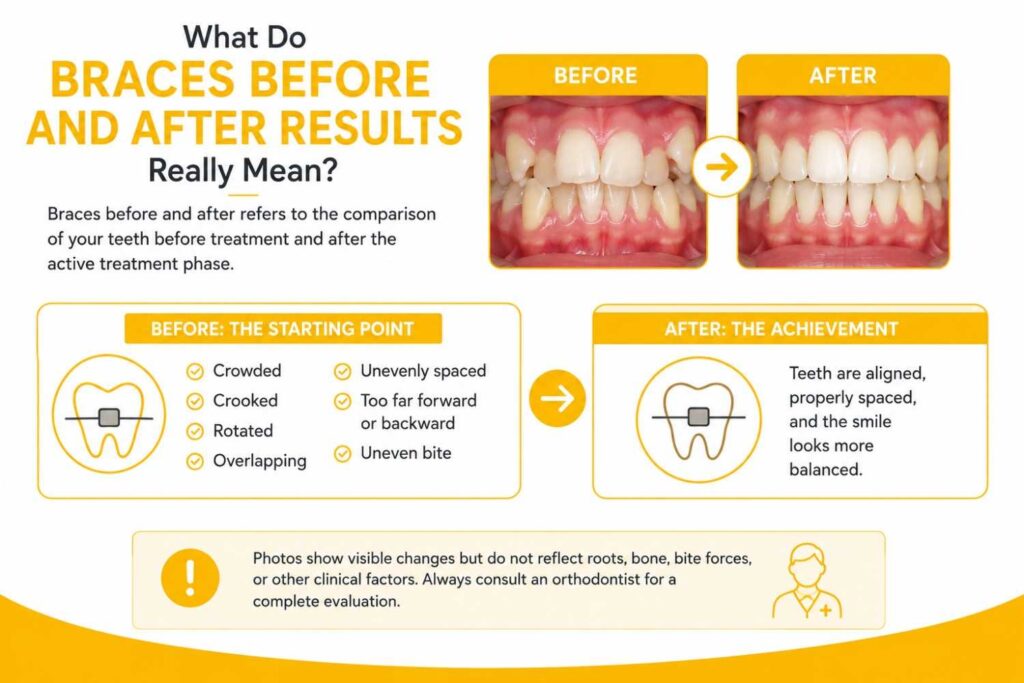
One reason braces before and after photos can look dramatically different is that orthodontic treatment involves controlled movement of multiple teeth.
A tooth does not simply move from one position to another instantly. The orthodontic system applies carefully planned forces over time. The tissues surrounding the tooth adapt as the tooth gradually changes position.
For example, a patient with overlapping front teeth may initially have very little visible space. During treatment, the teeth can gradually become more organised within the dental arch.
In another patient, a noticeable gap may become progressively smaller.
This means that braces before and after results are the outcome of many small movements rather than one sudden transformation.
Crowding is one of the most commonly recognised changes in braces before and after photographs.
When teeth do not have enough space to sit comfortably within the dental arch, they may overlap or rotate. Some teeth may sit behind or in front of neighbouring teeth.
After orthodontic treatment, the teeth may appear more evenly positioned.
The difference in braces before and after photographs may include:
The amount of improvement depends on the severity and cause of crowding. Mild crowding and complex crowding are not treated in exactly the same way.
Patients should therefore avoid comparing their teeth directly with a photograph found online. The treatment requirements behind each braces before and after result may be very different.
Spacing is another condition that can create an obvious difference in braces before and after photographs.
Some patients have a single gap between two teeth, while others have spaces throughout the dental arch. The reason for the spacing can also vary.
Orthodontic treatment may gradually bring suitable teeth closer together.
When comparing braces before and after photographs for spacing, patients may notice that:
However, closing a gap does not necessarily mean the orthodontic treatment is complete. The teeth also need to be evaluated for their overall position and bite.
The cause of the spacing is important because certain types of gaps may have a greater tendency to reopen without appropriate retention.
Crooked teeth may appear at different angles or positions within the dental arch. Some may also be rotated around their normal axis.
A major feature visible in many braces before and after comparisons is the correction of these rotations and uneven positions.
A tooth that originally appeared tilted may gradually become more upright. A rotated tooth may move into a more appropriate orientation.
These changes can make the overall smile look more orderly.
However, the visible appearance is only part of orthodontic treatment. The final position must also be compatible with the surrounding teeth and the patient’s bite.
Orthodontic treatment may influence the way the teeth sit within the dental arches, which can affect the appearance of the smile.
When crowded teeth become more organised, more of the tooth surfaces may become visible. When spaces are reduced, the teeth may appear more evenly distributed.
As a result, some braces before and after comparisons show a noticeable difference in the overall appearance of the smile.
The change varies from patient to patient. The shape of the dental arches, tooth size, facial structure, bite, and starting alignment all influence the final appearance.
This is why an orthodontist should assess the complete dental condition before estimating what a patient’s final smile may look like.
Patients often want to know when they will start seeing their braces before and after transformation.
Small changes may become noticeable during the early stages of treatment, particularly when teeth are significantly crowded or rotated. However, the final result generally requires considerably more time.
Orthodontic treatment follows a planned sequence. Teeth may move at different rates, and certain corrections need to happen before others.
A patient may therefore notice:
Early stage: Small changes in individual tooth positions.
Middle stage: More visible improvement in alignment and spacing.
Later stage: Fine adjustments to tooth positions and bite.
Completion stage: Final assessment before removal of the active orthodontic appliance.
The exact timeline for braces before and after changes cannot be predicted from photographs alone.
If you notice significant crowding, spacing, crooked teeth, difficulty biting, or concerns about the way the upper and lower teeth meet, an orthodontic assessment can provide useful information.
Looking at braces before and after examples may help you understand what treatment can potentially change, but an examination is needed to determine whether braces are appropriate for your particular condition.
A professional assessment can establish:
This personalised information is more valuable than relying only on braces before and after photographs.
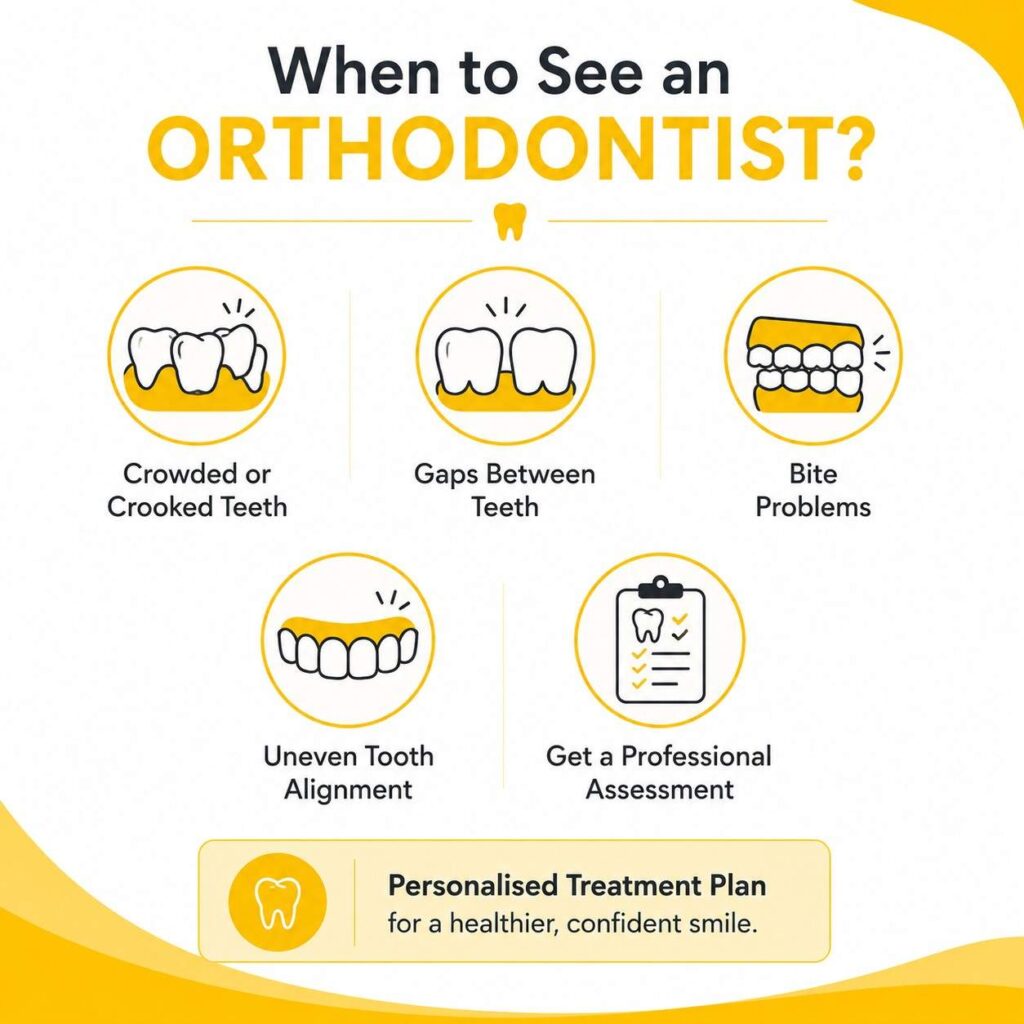
Braces before and after comparisons provide a simple visual way to understand how orthodontic treatment can change tooth alignment. They can demonstrate improvements in crowding, spacing, rotations, and the overall organisation of the smile.
However, the most important point is that every orthodontic case is different. The starting condition, treatment plan, tooth movement, bite, oral health, and patient cooperation all influence the final result.
The best way to understand your potential braces before and after outcome is to have your teeth and bite professionally assessed.For patients exploring orthodontic care in Dubai, Dream Smile Dental Clinic provides consultations for dental alignment concerns. The clinic’s main braces treatment guide covers the broader topic of orthodontic treatment, while this article provides a focused explanation of how to understand braces before and after changes. For additional information about cosmetic dentistry, smile enhancement, and maintaining long-term oral health, visit the Oral Health Foundation’s guide to cosmetic dentistry.
At our clinic, we take pride in our highly skilled and efficient team of dental specialists who are always ready to meet your dental needs.










Dream Smile Dental Clinic
Banyas square, Metro Station, Behind whitefort Hotel, Lilly Centre – Office No: 106, Deira, United Arab Emirates, UAE
WhatsApp us