7 Powerful Facts About How Long Do Braces Take for Results
Many people considering orthodontic treatment ask one important question: how long do braces take? Whether you’re a teenager or an adult, understanding the treatment timeline helps you prepare for the journey ahead. If you’re planning orthodontic treatment in Dubai, knowing what influences the duration can help set realistic expectations.
The answer is different for every person because every smile is unique. Some patients complete treatment in less than a year, while others may need two or even three years to achieve the best results. The length of treatment depends on several factors, including the severity of alignment issues, the type of braces used, oral hygiene, and how well patients follow their orthodontist’s instructions.
This guide explains how long do braces take, the stages of treatment, factors affecting duration, different types of braces, and practical tips to complete treatment as efficiently as possible.
Understanding How Long Do Braces Take
When people ask how long do braces take, the average treatment time usually ranges from 12 to 36 months.
General timelines include:
Mild alignment problems: 6–12 months
Moderate orthodontic issues: 12–24 months
Complex bite correction: 24–36 months
Severe jaw alignment problems: More than 36 months in some cases
The goal isn’t simply moving teeth quickly but ensuring they move safely and remain stable for years.
Why Treatment Time Varies
There isn’t one fixed answer to how long do braces take because orthodontic treatment is highly personalized.
Several factors influence treatment duration:
Severity of Misalignment
Minor spacing or crowding requires less time than severe bite correction.
Type of Bite Problem
Examples include:
Overbite
Underbite
Crossbite
Open bite
Deep bite
Complex bite problems usually increase treatment time.
Age
Children and teenagers often experience faster tooth movement because their jawbones are still developing.
Adults can achieve excellent results too, although treatment may take slightly longer.
Bone Density
Denser bone may slow tooth movement.
Patient Cooperation
Patients who:
Wear elastics consistently
Attend appointments
Maintain oral hygiene
often finish treatment faster.
Common Orthodontic Problems That Need Braces
Braces help correct numerous dental concerns.
Crooked Teeth
Misaligned teeth affect appearance and cleaning.
Crowded Teeth
When there isn’t enough space, teeth overlap.
Gaps Between Teeth
Spaces may occur naturally or after tooth loss.
Overbite
Upper teeth extend excessively over lower teeth.
Underbite
Lower teeth sit ahead of upper teeth.
Crossbite
Some upper teeth fit inside lower teeth.
Open Bite
Front teeth don’t touch when the mouth closes.
Stages of Braces Treatment
Understanding each stage helps answer how long do braces take.
Initial Consultation
The orthodontist performs:
Clinical examination
X-rays
Digital scans
Bite analysis
Treatment planning
Placement of Braces
Brackets are attached to each tooth.
An archwire connects the brackets and begins moving teeth gradually.
Initial Alignment
During the first few months:
Crowded teeth begin straightening.
Gaps slowly reduce.
Mild discomfort is common.
This stage usually lasts:
2–6 months
Bite Correction
This phase focuses on correcting jaw alignment.
Patients may wear:
Rubber bands
Springs
Additional appliances
Duration varies significantly depending on complexity.
Fine Adjustments
Small corrections improve:
Tooth position
Bite
Smile symmetry
Precision adjustments may take several months.
Braces Removal
Once treatment goals are achieved:
Braces are removed.
Teeth are polished.
Retainers are provided.
Types of Braces and Their Treatment Time
Different braces influence how long do braces take.
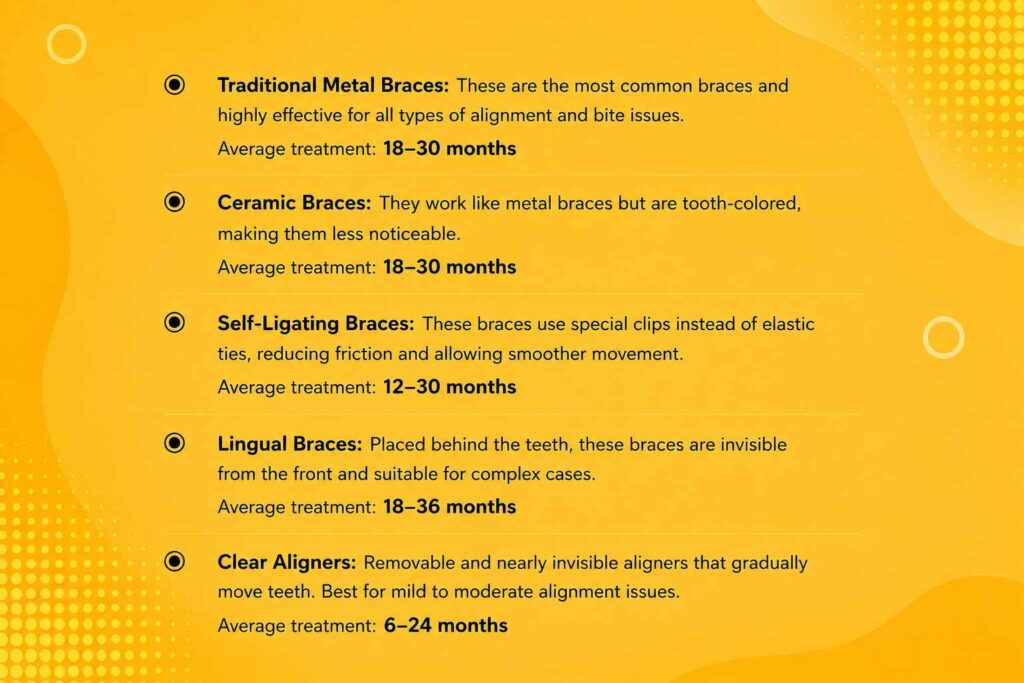
Traditional Metal Braces
These remain the most effective option for complex cases.
Average duration:
18–30 months
Advantages:
Strong
Reliable
Suitable for severe corrections
Ceramic Braces
Ceramic braces work similarly to metal braces.
Average treatment:
18–30 months
Benefits:
Less noticeable
Blend with teeth
Self-Ligating Braces
These use specialized clips instead of elastic ties.
Potential advantages:
Easier cleaning
Less friction
Shorter appointments
Treatment time:
12–30 months
Lingual Braces
Placed behind teeth.
Average treatment:
18–36 months
Advantages:
Invisible from the front
Clear Aligners
Suitable for mild to moderate cases.
Average duration:
6–24 months
Success depends heavily on wearing aligners consistently.
Factors That Can Increase Treatment Time
Several issues may extend braces treatment.
Poor Oral Hygiene
Plaque buildup may cause:
Gum disease
Tooth decay
Delayed adjustments
Missed Appointments
Regular appointments allow steady progress.
Missing visits often extends treatment.
Broken Brackets
Damaged brackets interrupt tooth movement.
Avoid:
Hard candy
Ice
Sticky foods
Not Wearing Elastics
Rubber bands play an important role.
Failure to wear them as instructed may add months to treatment.
Smoking
Smoking affects oral health and healing.
It may contribute to slower progress.
Can Braces Work Faster
Patients often ask whether braces can finish early.
Although treatment cannot safely be rushed, certain habits improve efficiency.
These include:
Following orthodontic instructions
Keeping appointments
Wearing elastics
Maintaining excellent oral hygiene
Avoiding broken brackets
Signs Your Braces Are Working
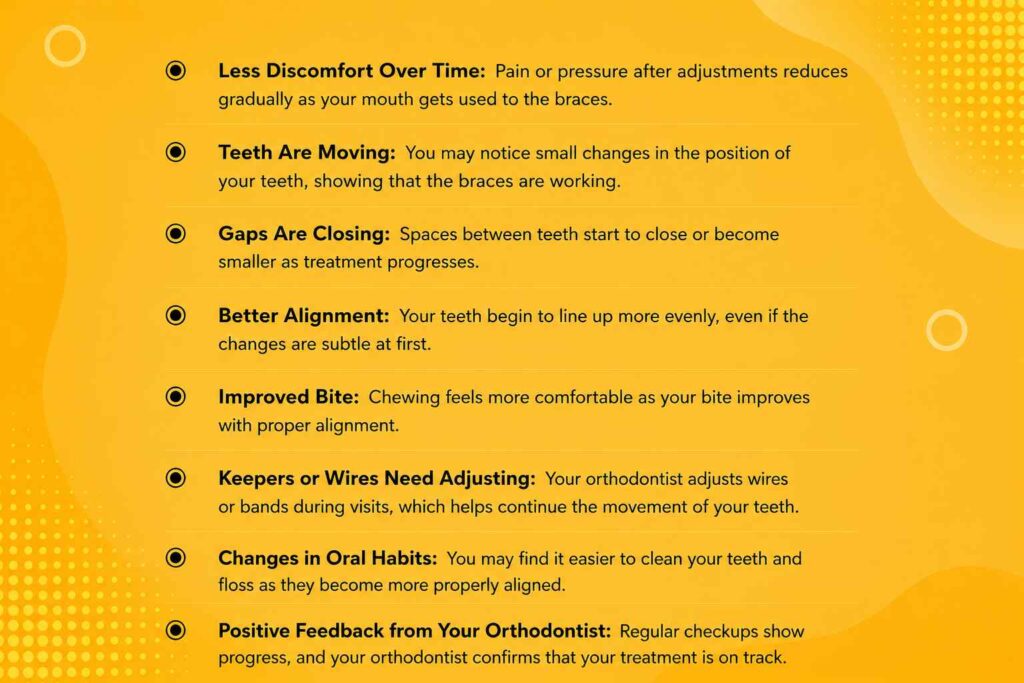
You may notice:
Teeth becoming straighter
Gaps closing
Better bite alignment
Improved chewing
Easier brushing
Increased confidence
Gradual changes indicate healthy tooth movement.
What Happens After Braces
Removing braces does not end orthodontic care.
Retainers are essential.
Without retainers:
Teeth may shift.
Bite changes can occur.
Previous corrections may be lost.
Retention helps preserve long-term results.
How Long Are Retainers Worn
Retention varies by patient.
Common recommendations include:
Full-time wear for several months
Night-time wear afterward
Long-term nighttime use for stability
Benefits of Completing Braces Treatment
Finishing orthodontic treatment offers many advantages.
Proper alignment supports healthier teeth throughout life.
Daily Care During Braces Treatment
Maintaining braces properly helps avoid delays.
Brush Carefully
Brush after every meal.
Floss Daily
Use orthodontic floss or floss threaders.
Limit Sugary Foods
Reduce plaque buildup.
Avoid Hard Foods
Examples:
Popcorn kernels
Ice
Nuts
Hard candies
Wear Mouthguards
Protect braces during sports.
Foods to Eat While Wearing Braces
Soft foods are often easier.
Good choices include:
Yogurt
Mashed potatoes
Rice
Soup
Eggs
Pasta
Smoothies
Bananas
Oatmeal
Soft vegetables
Foods to Avoid
Certain foods damage braces.
Avoid:
Sticky candy
Caramel
Gum
Ice cubes
Hard nuts
Crunchy chips
Popcorn kernels
Myths About How Long Do Braces Take
Myth 1: Adults Need Much Longer Treatment
Not always.
Many adults complete treatment within the normal timeframe.
Myth 2: Braces Work Overnight
Tooth movement happens gradually.
Safe movement protects roots and gums.
Myth 3: Tightening Means Faster Results
Adjustments guide movement carefully.
More pressure does not mean quicker treatment.
Myth 4: All Braces Take the Same Time
Different orthodontic problems require different timelines.
Tips to Complete Braces Treatment on Time
Attend every appointment.
Brush thoroughly.
Floss daily.
Wear elastics consistently.
Avoid damaging foods.
Report broken brackets immediately.
Follow professional advice.
Wear retainers after treatment.
These habits help reduce unnecessary delays.
Conclusion
Understanding how long do braces take helps patients begin treatment with realistic expectations. Most orthodontic treatments last between one and three years, depending on individual needs and the complexity of tooth movement. Good oral hygiene, regular appointments, and following orthodontic instructions all contribute to successful treatment. If you’re considering braces in Dubai, consulting an experienced orthodontic provider will help determine the most suitable treatment plan and expected timeline for your smile. For more information about braces and orthodontic treatment, visit the Cleveland Clinic .
Frequently Asked Questions
How Long Do Braces Take - FAQ
1. How long do braces take on average?+
Most braces treatments take between 12 and 36 months, depending on the complexity of the orthodontic problem and the patient's individual treatment plan.
2. Can braces treatment be completed within one year?+
Yes. Mild alignment or spacing issues may be corrected within 6 to 12 months, while more complex cases generally require a longer treatment period.
3. Do adults wear braces longer than teenagers?+
Not necessarily. Although adult teeth may move slightly more slowly, many adults complete braces treatment within a similar timeframe as teenagers.
4. Which type of braces works the fastest?+
The speed of treatment depends more on the orthodontic condition than the type of braces. Your orthodontist will recommend the most suitable option for your needs.
5. Can broken brackets delay braces treatment?+
Yes. Broken brackets or damaged wires can interrupt tooth movement and may increase the overall treatment duration if not repaired promptly.
6. Do rubber bands help braces work faster?+
Rubber bands help guide teeth and jaw alignment according to the treatment plan. Wearing them consistently can prevent unnecessary treatment delays.
7. Will my teeth move after braces are removed?+
Yes. Teeth can gradually shift after braces are removed, which is why wearing retainers as instructed is important for maintaining your results.
8. Is braces treatment painful?+
Braces treatment is generally not painful, although mild soreness or pressure may occur for a few days after braces are fitted or adjusted.
9. How often do braces need adjustment?+
Most patients visit their orthodontist every 4 to 8 weeks for adjustments and to monitor treatment progress.
10. Can good oral hygiene reduce braces treatment time?+
Good oral hygiene helps prevent cavities and gum problems that could delay treatment, allowing braces to work according to the planned schedule.
Our Team of Skilled Dentists In Dubai
At our clinic, we take pride in our highly skilled and efficient team of dental specialists who are always ready to meet your dental needs.