A healthy, well-aligned smile contributes to both confidence and long-term oral health. Many people ask when should you get braces because they notice crooked teeth, bite problems, or spacing issues but are unsure whether orthodontic treatment is necessary. Braces are designed to gradually move teeth into proper alignment, improving not only appearance but also chewing, speaking, and overall dental health. If you are considering orthodontic treatment in Dubai, understanding the right time to begin can help you avoid more complex dental problems in the future.
Braces are no longer limited to teenagers. Modern orthodontic treatments are suitable for children, adolescents, and adults. Recognizing the early signs that indicate you may need braces allows you to seek timely care and achieve better treatment outcomes.
Many people think braces are only used to create a beautiful smile. While cosmetic improvement is certainly one benefit, orthodontic treatment offers several important health advantages.
Properly aligned teeth can:
Ignoring orthodontic problems may eventually lead to more complicated dental treatments. Understanding when should you get braces helps you address these concerns before they become more serious.
Dental braces are orthodontic appliances designed to correct the position of teeth and jaws over time. They apply gentle, continuous pressure that gradually moves teeth into healthier and more functional positions.
A braces system commonly includes:
Every treatment plan is customized according to the patient’s dental condition and treatment goals.
Braces move teeth slowly by applying controlled pressure. As the teeth shift, the surrounding jawbone naturally remodels to support their new position.
A typical treatment process includes:
The length of treatment varies depending on the complexity of the orthodontic problem, age, and patient cooperation.
Several dental conditions can indicate that orthodontic treatment may be beneficial.
Some of the most common reasons include:
Recognizing these issues early often leads to simpler and more predictable treatment.
Crooked teeth are among the most common reasons people seek orthodontic treatment.
When teeth overlap or become crowded, they are often difficult to clean properly. Food particles and plaque can accumulate in hard-to-reach areas, increasing the likelihood of cavities and gum disease.
Common signs include:
Braces gradually create adequate space and improve alignment, making daily oral hygiene much easier.
Noticeable gaps between teeth may occur naturally or develop due to missing teeth, jaw size differences, or genetics.
Large spaces may:
Braces help close unnecessary spaces while creating a more balanced smile and improving overall bite function.
One of the most common bite problems is an overbite, where the upper front teeth overlap the lower teeth more than normal.
A severe overbite may contribute to:
Correcting an overbite with braces can improve both function and appearance.
An underbite occurs when the lower teeth extend in front of the upper teeth.
This condition may lead to:
Depending on severity, braces alone or combined orthodontic treatment may help improve the bite.
A crossbite happens when some upper teeth bite inside the lower teeth instead of outside them.
If untreated, it may cause:
Braces help reposition the affected teeth to create a healthier bite.
An open bite means the upper and lower front teeth do not touch when the mouth is closed.
People with an open bite often experience:
Orthodontic treatment helps improve tooth positioning and bite function.
Jaw discomfort is not always caused by orthodontic problems, but poor bite alignment can place additional stress on the jaw joints.
Symptoms may include:
If these symptoms are associated with bite problems, braces may become part of the overall treatment plan after a comprehensive orthodontic evaluation.
When evaluating when should you get braces, orthodontists examine several factors rather than focusing only on how your teeth look.
They typically assess:
Digital X-rays, photographs, and dental impressions or 3D scans help create a personalized treatment plan based on your specific needs.
One of the most common questions people ask after learning when should you get braces is whether there is an ideal age for treatment.
The answer depends on the individual’s dental development rather than age alone. Orthodontic treatment can be successful during childhood, adolescence, and adulthood.
Orthodontic evaluations are often recommended by the age of seven. At this stage, permanent teeth are beginning to erupt, making it easier to identify developing bite or alignment problems.
Early evaluation may help detect:
Not every child requires immediate braces, but monitoring dental development can help determine the right timing.
The teenage years are often considered the most common time for braces because most permanent teeth have erupted while the jaw is still developing.
Benefits of getting braces during adolescence include:
Many orthodontic cases are completed successfully during these years.
Adults are increasingly choosing orthodontic treatment to improve both their smiles and oral health.
Adult braces can help correct:
Although treatment may take slightly longer than in younger patients, excellent outcomes are still possible with proper care and commitment.
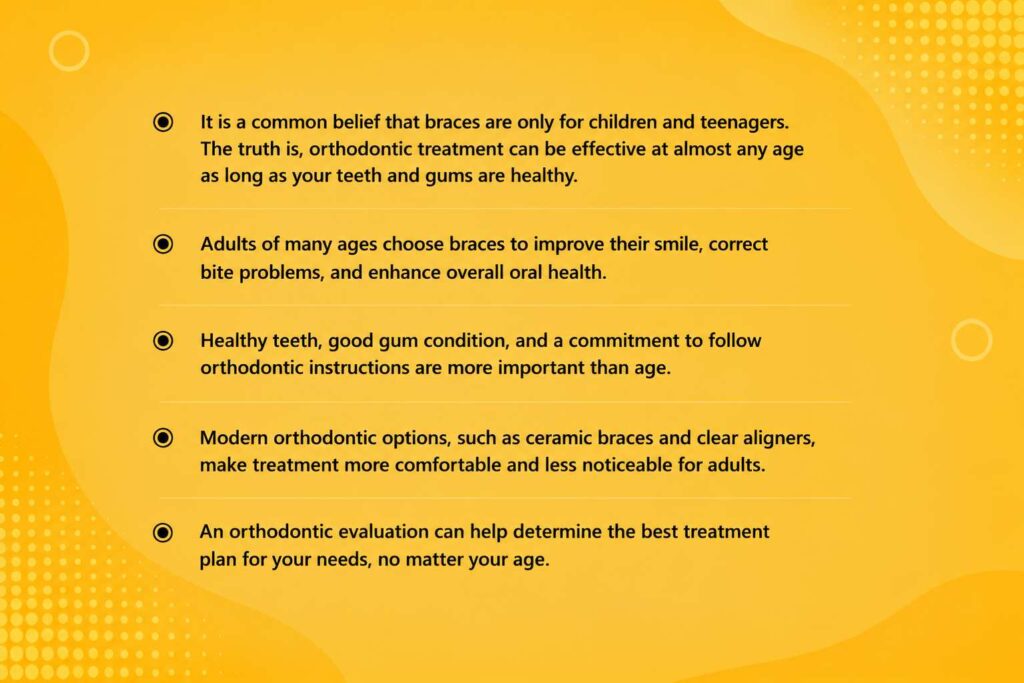
One of the biggest misconceptions is that braces are only for children.
The truth is that healthy teeth and gums are the primary requirements for orthodontic treatment. Adults of many ages can benefit from braces if their oral health supports treatment.
Many adults seek braces to:
An orthodontic assessment can determine whether braces are suitable regardless of age.
Modern orthodontics offers several treatment options to suit different dental conditions and personal preferences.
Metal braces remain one of the most effective orthodontic treatments.
Advantages include:
Ceramic braces function similarly to metal braces but use tooth-colored brackets that are less noticeable.
Benefits include:
They require careful cleaning to maintain their appearance.
Self-ligating braces use specialized clips instead of elastic bands to hold the orthodontic wire.
Potential advantages include:
Lingual braces are attached to the back surfaces of the teeth, making them virtually invisible from the front.
They may be suitable for people seeking discreet orthodontic treatment but can require an adjustment period for speaking and cleaning.
Clear aligners are removable transparent trays designed to gradually move teeth.
Benefits include:
However, they require consistent daily wear to achieve the desired results.
Understanding when should you get braces also means understanding the many benefits orthodontic treatment can provide.
Straighter teeth create a more balanced and attractive smile that many people feel more confident sharing.
Crowded and overlapping teeth are difficult to clean.
After alignment improves:
Correctly aligned teeth distribute chewing forces more evenly.
Benefits include:
When teeth do not align properly, certain teeth receive excessive pressure.
Braces help reduce:
Some bite problems affect pronunciation.
Correcting tooth position may improve speech clarity for certain individuals.
Balanced bites place less stress on the jaw joints, reducing discomfort associated with poor alignment in appropriate cases.
Postponing orthodontic treatment may allow existing problems to become more severe over time.
Possible consequences include:
Early assessment allows orthodontists to recommend the most appropriate treatment timing.
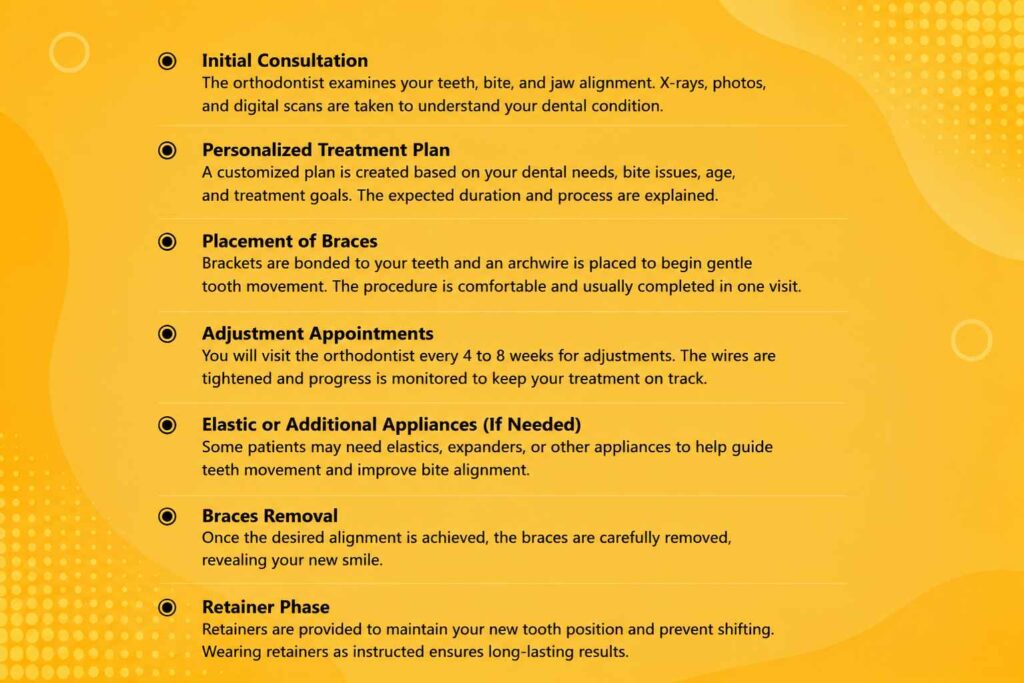
Knowing what happens during treatment helps patients feel more confident.
A typical braces journey includes:
The orthodontist evaluates:
Diagnostic records such as X-rays, photographs, and digital scans are collected.
A personalized plan is developed based on:
The expected treatment duration is also discussed.
Brackets are bonded to the teeth, and an orthodontic wire is placed to begin gentle tooth movement.
The procedure is generally comfortable and usually completed in a single appointment.
Patients return periodically for:
These visits keep treatment progressing as planned.
Once the desired alignment is achieved, the braces are removed, revealing the newly aligned smile.
Retainers help maintain the new tooth positions and are an essential part of successful orthodontic treatment.
Following retainer instructions reduces the risk of teeth shifting back over time.
Orthodontic treatment is a partnership between you and your orthodontist. While braces steadily move your teeth into better alignment, your daily habits play a significant role in achieving the best outcome.
Follow these practical tips throughout your treatment:
Small daily efforts can make a significant difference in the success of your orthodontic treatment.
Certain foods can damage brackets or wires, leading to delays in treatment.
It is generally best to avoid:
Choosing softer foods helps protect your braces and reduces the chance of emergency repairs.
Many misconceptions still surround orthodontic treatment. Understanding the facts can help you make informed decisions.
Fact: Braces can be effective for both teenagers and adults with healthy teeth and gums.
Fact: Besides improving appearance, braces help enhance bite function, oral hygiene, and long-term dental health.
Fact: Mild soreness is common after adjustments, but it usually subsides within a few days. Modern braces are designed to be more comfortable than ever before.
Fact: Treatment time varies depending on the complexity of the case. Some patients complete treatment in about a year, while others may require longer.
Fact: Teeth naturally tend to shift over time. Wearing retainers as instructed helps maintain the results achieved with braces.
If you experience any of the following, it may be a good idea to seek an orthodontic assessment:
An early evaluation can identify orthodontic concerns and help determine the most appropriate treatment plan.
Understanding when should you get braces is an important step toward achieving a healthier smile and better oral function. Braces are not only designed to improve the appearance of your teeth but also to correct bite problems, enhance chewing efficiency, make oral hygiene easier, and support long-term dental health. Whether you notice crowded teeth, spacing issues, jaw discomfort, or bite irregularities, seeking a professional orthodontic evaluation can help determine the most suitable treatment.
Orthodontic care is beneficial for children, teenagers, and adults, making it possible to improve dental alignment at almost any stage of life. If you have been wondering when should you get braces, paying attention to the warning signs discussed in this guide and consulting an orthodontic professional can help you make an informed decision. For individuals considering treatment in Dubai, early assessment and timely care can contribute to healthier teeth, improved function, and a confident smile that lasts for years. Learn more about braces, orthodontic treatment, and oral health from the American Dental Association (ADA), which provides reliable information to help patients make informed dental care decisions.
Dream Smile Dental Clinic
Banyas square, Metro Station, Behind whitefort Hotel, Lilly Centre – Office No: 106, Deira, United Arab Emirates, UAE
WhatsApp us