The Top 10 Benefits of Ceramic Braces explain why this orthodontic option is increasingly considered by teenagers and adults who prefer a less noticeable way to straighten their teeth. Ceramic braces work similarly to traditional fixed braces, but their clear or tooth-coloured brackets blend more naturally with the smile.
For patients considering orthodontic care in Kerala, ceramic braces may provide a practical balance between appearance, treatment control, and everyday comfort. They can be used to manage crowded teeth, gaps, crooked teeth, and certain bite concerns following a complete dental evaluation.
However, ceramic braces are not selected for appearance alone. They offer controlled tooth movement, remain fixed throughout treatment, and can be customised according to individual orthodontic needs. Understanding their main advantages can help patients discuss suitable treatment options with a dental professional.
Ceramic braces are fixed orthodontic appliances made with transparent or tooth-coloured brackets. These brackets are bonded to the front surfaces of the teeth and connected using an orthodontic archwire.
The wire applies gentle and continuous pressure, gradually moving the teeth into planned positions. During follow-up appointments, the orthodontist may adjust the wire, replace elastic ties, and monitor the progress of tooth movement.
The main components of ceramic braces include:
Ceramic braces remain attached to the teeth until active treatment is completed. This makes them different from clear aligners, which can be removed by the patient.
Patients may choose ceramic braces when they need the control of fixed orthodontic treatment but prefer an appliance that is less visible than traditional metal braces.
They are commonly considered by:
The final decision should be based on dental health, treatment complexity, lifestyle, budget, and professional assessment.
ctus nec ullamcorper mattis, pulvinar dapibus leo.

The following Top 10 Benefits of Ceramic Braces show why this treatment may be suitable for selected orthodontic patients.
One of the most recognised advantages of ceramic braces is their discreet appearance. The brackets are generally clear, white, or tooth-coloured, allowing them to blend with the natural shade of the teeth.
Traditional metal braces are easily visible because of their metallic brackets. Ceramic braces are still noticeable at close range, but they tend to appear more subtle during conversations, photographs, meetings, and social occasions.
This feature may be particularly valuable for adults and older teenagers who feel self-conscious about wearing conventional braces.
The colour of ceramic brackets may vary depending on the system used. An orthodontic professional can select a bracket shade that works appropriately with the natural teeth.
Another important point among the Top 10 Benefits of Ceramic Braces is their ability to provide controlled orthodontic movement.
Because ceramic braces are fixed to the teeth, the orthodontist can carefully manage:
Regular appointments allow the professional to modify the force applied through the wire. This controlled approach supports gradual movement while protecting the surrounding tissues.
Ceramic braces may be used for mild, moderate, and selected complex alignment concerns. Suitability depends on the patient’s individual diagnosis.
Ceramic braces are commonly considered by both teenagers and adults. Their discreet appearance can make orthodontic treatment feel more manageable during school, college, work, and social activities.
Teenagers may choose ceramic braces when they want an appliance that attracts less attention. Adults may prefer them because they can maintain a more natural-looking smile during professional communication.
However, the patient must be able to follow oral hygiene and dietary instructions. Younger patients who regularly consume hard foods or participate in contact activities may require additional guidance.
Age alone does not determine suitability. Gum health, enamel condition, bone support, bite relationship, and treatment goals are also important.
Clear aligners usually need to be worn for a specific number of hours every day. Patients must remember to remove them before meals, clean them, and put them back in place.
Ceramic braces remain fixed to the teeth. This means the patient does not need to remember a daily wearing schedule.
This can be helpful for individuals who:
Although ceramic braces do not require daily insertion, patients must still brush carefully, avoid damaging foods, and attend regular appointments.
Every patient has a different tooth position, bite pattern, jaw relationship, and smile shape. Ceramic braces can be incorporated into a personalised orthodontic plan.
Customisation may include:
Treatment planning may begin with photographs, X-rays, digital scans, impressions, and a bite assessment.
The plan may also consider the patient’s facial profile, age, dental history, oral hygiene, and expected treatment duration.
Orthodontic treatment can last several months or longer. During this period, some patients may feel concerned about the appearance of their braces.
The less noticeable design of ceramic brackets may help patients feel more confident while smiling, speaking, attending events, or being photographed.
Improved confidence does not mean the braces are invisible. The archwire and outlines of the brackets can still be seen. However, their appearance is generally less prominent than that of standard metal braces.
This psychological comfort is one of the practical Top 10 Benefits of Ceramic Braces, especially for patients who previously delayed treatment because of concerns about visible appliances.
Ceramic braces are not limited to one type of tooth problem. Depending on the diagnosis, they may help improve several orthodontic concerns.
Crowding occurs when there is insufficient space for the teeth to align normally. Ceramic braces may gradually reposition overlapping or rotated teeth.
Suitable spaces can be reduced by moving neighbouring teeth towards planned positions.
Teeth that are angled, twisted, or positioned outside the normal dental arch may be gradually aligned.
An excessive vertical overlap of the upper and lower front teeth may require orthodontic correction.
A crossbite occurs when certain upper teeth sit inside the lower teeth when biting.
An open bite is present when some upper and lower teeth do not meet while the mouth is closed.
The treatment approach depends on the cause and severity of the condition. Some patients may require additional appliances or procedures.
Crowded and overlapping teeth can create narrow spaces that are difficult to clean. Food particles and plaque may accumulate in these areas.
By improving tooth alignment, orthodontic treatment may make long-term brushing and flossing more manageable after the braces are removed.
Better alignment may support:
Patients must maintain particularly careful oral hygiene while the braces are still in place. Brackets and wires create additional areas where food can collect.
Interdental brushes, orthodontic floss threaders, and other recommended cleaning aids may be useful during treatment.
Ceramic brackets are produced from strong dental materials designed to tolerate routine orthodontic forces.
They can remain functional throughout treatment when patients follow dietary and care instructions. However, ceramic is comparatively more brittle than metal. Patients should avoid biting hard objects or foods directly with the brackets.
Items that may cause damage include:
Firm fruits and vegetables can usually be cut into small pieces or cooked until soft.
Ceramic braces are durable, but careful eating habits help reduce loose or cracked brackets.
The final advantage among the Top 10 Benefits of Ceramic Braces is the balance they provide between discreet appearance and fixed orthodontic control.
Clear aligners offer a nearly transparent design but require strong patient compliance. Metal braces offer reliable fixed treatment but are more noticeable.
Ceramic braces sit between these options by providing:
This balance may make ceramic braces appropriate for patients who want a discreet appliance but prefer not to manage removable trays.
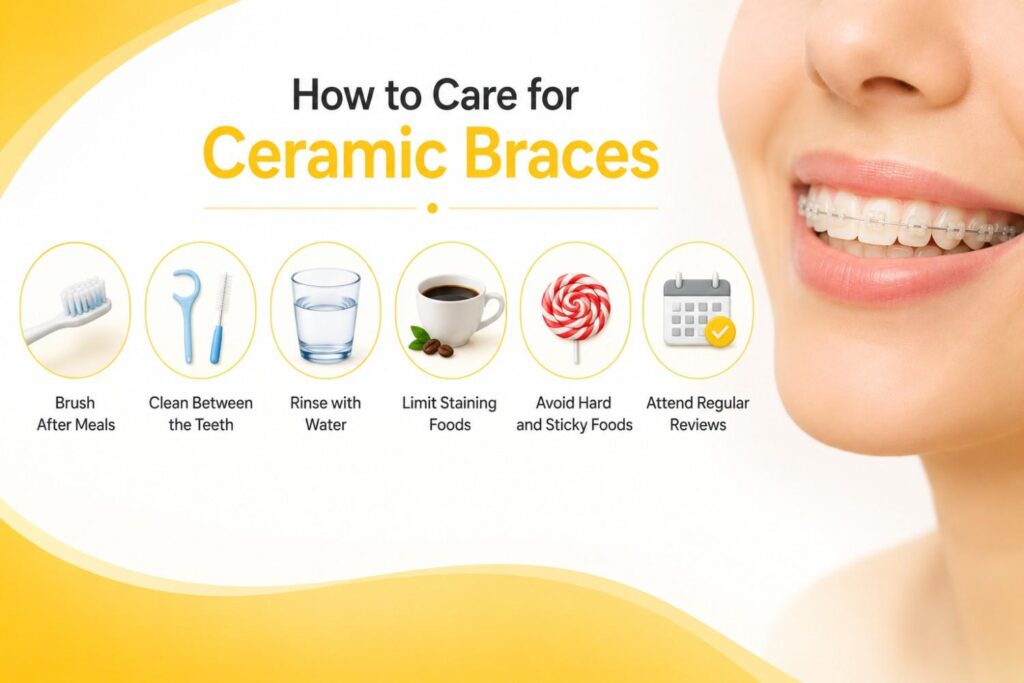
Proper maintenance protects the brackets and supports oral health throughout treatment.
Brush carefully around the top, bottom, and sides of every bracket. Use gentle circular movements and avoid applying excessive force.
Use floss threaders, interdental brushes, or other cleaning aids recommended by the dental professional.
Rinsing after meals can help remove loose food particles and reduce prolonged exposure to strongly coloured ingredients.
Coffee, tea, turmeric-rich meals, tomato-based sauces, dark soft drinks, and coloured sweets may stain clear elastic ties.
These foods may loosen brackets, bend wires, or become trapped around the appliance.
Adjustment appointments are necessary to monitor tooth movement, replace components, and keep treatment progressing.
The treatment journey normally includes several stages.
The orthodontic professional examines the teeth, gums, jaw relationship, and bite.
Dental photographs, X-rays, digital scans, or impressions may be taken.
The required tooth movements, estimated duration, and appliance design are discussed.
The teeth are cleaned before the ceramic brackets are attached. The wire is then inserted and secured.
Regular reviews allow the wire and other components to be adjusted.
Once the planned result has been achieved, the brackets are professionally removed.
A retainer helps maintain the corrected tooth positions after active treatment.
The Top 10 Benefits of Ceramic Braces include a less noticeable appearance, controlled tooth movement, fixed treatment, personalised planning, and suitability for several alignment concerns. These features can make ceramic braces a practical option for patients who want reliable orthodontic care without highly visible metal brackets.
Ceramic braces still require careful cleaning, suitable food choices, regular follow-up appointments, and retainer use after treatment. Patients seeking ceramic braces in Kerala should undergo a complete dental and orthodontic assessment before selecting an appliance. Understanding the Top 10 Benefits of Ceramic Braces can support a more informed discussion about treatment goals, lifestyle requirements, and expected results.
To learn more about orthodontic treatment and maintaining good oral health, visit the American Dental Association’s MouthHealthy resource.
At our clinic, we take pride in our highly skilled and efficient team of dental specialists who are always ready to meet your dental needs.








Dream Smile Dental Clinic
Banyas square, Metro Station, Behind whitefort Hotel, Lilly Centre – Office No: 106, Deira, United Arab Emirates, UAE
WhatsApp us