Tips on how to whiten teeth safely Without Risk Now

A bright smile can improve confidence, but it is important to understand how to whiten teeth safely before trying any whitening method. In Deira, many people look for quick smile improvement, but safe whitening always starts with proper oral care, the right product choice, and professional dental guidance when needed.

Teeth whitening is not just about making teeth look brighter. It is also about protecting enamel, reducing sensitivity, and avoiding harsh methods that may damage your smile. This guide explains how to whiten teeth safely, why teeth become stained, the different whitening options available, signs you may need dental care, and practical tips for long-term results.

What Does how to whiten teeth safely Mean?

How to whiten teeth safely means using whitening methods that brighten teeth without harming enamel, gums, or overall oral health. Safe teeth whitening focuses on gradual improvement rather than instant results.

Many people try random home remedies, strong bleaching products, or abrasive powders without knowing the risks. These methods may make teeth appear cleaner for a short time, but they can also cause sensitivity, enamel wear, gum irritation, or uneven whitening.

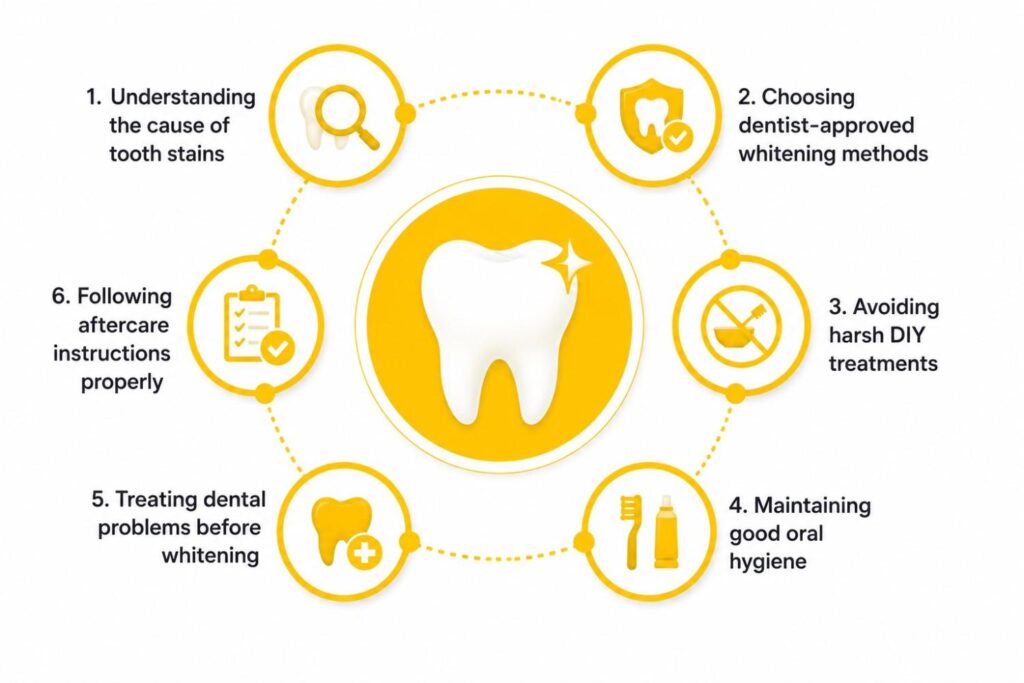
Illustration showing best practices for safe teeth whitening, including identifying the cause of tooth stains, choosing dentist-approved whitening methods, maintaining oral hygiene, treating dental issues, avoiding DIY treatments, and following aftercare instructions.

A safe approach includes:

  • Understanding the cause of tooth stains
  • Choosing dentist-approved whitening methods
  • Avoiding harsh DIY treatments
  • Maintaining good oral hygiene
  • Treating dental problems before whitening
  • Following aftercare instructions properly

When you know how to whiten teeth safely, you can improve your smile while keeping your teeth healthy.

Why Do Teeth Become Yellow or Stained?

Before learning how to whiten teeth safely, it helps to understand why teeth lose brightness. Tooth discoloration can happen for many reasons.


1. Food and Drink Stains

Coffee, tea, cola, red sauces, and dark-colored foods can stain the outer layer of teeth over time. These stains usually affect the enamel surface.

2. Poor Oral Hygiene

If plaque and tartar build up on teeth, the smile may look dull or yellow. Regular brushing, flossing, and dental cleaning help reduce this issue.

3. Smoking or Tobacco Use

Tobacco can cause deep yellow or brown stains. These stains are often harder to remove with basic brushing.

4. Aging

As people age, enamel naturally becomes thinner. The yellowish dentin underneath may become more visible, making teeth appear less white.

5. Certain Medicines

Some medications can affect tooth color, especially when used during tooth development. A dentist can identify whether whitening will help in such cases.

6. Dental Conditions

Cavities, worn enamel, gum disease, and old fillings may change how teeth look. That is why dental evaluation is important before whitening.

Types of Tooth Discoloration

Knowing the type of stain helps you choose how to whiten teeth safely.

Extrinsic Stains

Extrinsic stains are surface stains on the enamel. They are commonly caused by food, drinks, tobacco, and plaque buildup. These stains often respond well to cleaning, polishing, whitening toothpaste, or professional whitening.

Intrinsic Stains

Intrinsic stains are inside the tooth structure. They may be caused by trauma, aging, certain medicines, or excess fluoride exposure during childhood. These stains may need professional whitening or cosmetic dental options.

Age-Related Discoloration

Age-related discoloration is usually a mix of surface stains and internal color changes. A dentist can suggest a safe whitening plan based on tooth condition.

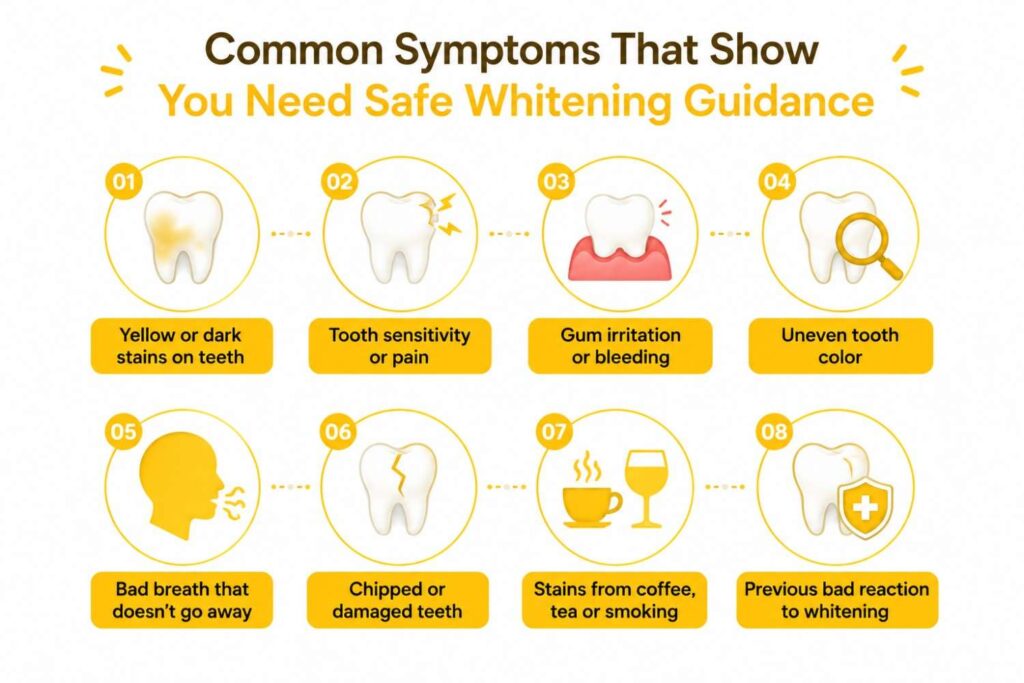
Common Symptoms That Show You Need Safe Whitening Guidance

Whitening may seem simple, but some signs show that you should be careful. If you want to understand how to whiten teeth safely, look for these symptoms:

Illustration showing common symptoms that indicate the need for safe teeth whitening guidance, including tooth stains, tooth sensitivity, gum irritation, uneven tooth color, bad breath, chipped teeth, stain-causing habits, and previous whitening reactions.

Professional Treatments for how to whiten teeth safely

Professional dental treatments are often the safest option for people who want visible whitening results.

1. In-Clinic Teeth Whitening

In-clinic whitening is performed under dental supervision. The dentist protects the gums and applies a controlled whitening gel to the teeth. This method is suitable for people looking for faster and safer results.

2. Dentist-Supervised Home Whitening Kits

Some dentists provide customized whitening trays and professional-grade whitening gel. These trays fit the teeth properly, helping reduce gum irritation and uneven whitening.

3. Dental Cleaning and Polishing

Sometimes teeth look yellow because of plaque and tartar, not deep staining. In such cases, professional cleaning and polishing may make the smile look brighter without bleaching.

4. Cosmetic Dental Options

For stains that do not respond to whitening, dentists may suggest veneers, bonding, or crowns. These are usually considered when discoloration is deep or linked to tooth structure.

Home Care Tips on how to whiten teeth safely

Many people want to know how to whiten teeth safely at home. Home care can help, but it should be gentle and consistent.

  • Brush Twice Daily

Use a soft-bristled toothbrush and fluoride toothpaste. Brushing too hard can wear enamel and increase sensitivity.

  • Floss Every Day

Flossing removes plaque and food particles between teeth. This prevents stains from building up in hard-to-clean areas.

  • Use Whitening Toothpaste Carefully

Whitening toothpaste can help remove surface stains. However, it should not be used aggressively or too often if you already have sensitivity.

  • Rinse After Staining Foods

After drinking coffee, tea, or colored beverages, rinse your mouth with water. This simple habit reduces stain buildup.

  • Avoid Harsh DIY Remedies

Avoid using lemon juice, charcoal powders, baking soda scrubs, or strong peroxide without dental advice. These can damage enamel or irritate gums.

  • Drink More Water

Water helps wash away food particles and acids. It also supports saliva flow, which naturally protects teeth.

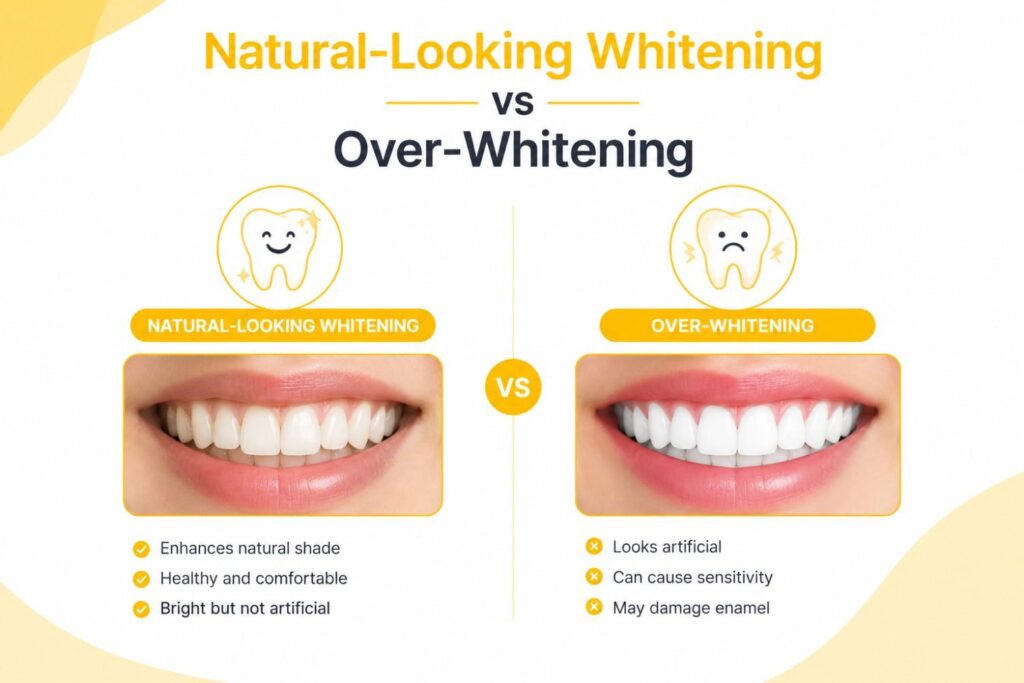
Natural-Looking Whitening vs Over-Whitening

A healthy white smile should look natural. Over-whitening can make teeth look artificial or cause discomfort. Safe whitening aims to improve brightness while respecting your natural tooth shade.

When people ask how to whiten teeth safely, the best answer is not always the fastest method. The best answer is the method that improves your smile without harming your teeth.

Comparison illustration showing natural-looking teeth whitening versus over-whitening, highlighting the difference between a healthy, natural smile and an overly white, artificial-looking smile.

When Should You See a Dentist?

You should see a dentist before whitening if you have:

  • Tooth pain
  • Severe sensitivity
  • Gum bleeding
  • Cavities
  • Cracked teeth
  • Dental crowns or veneers
  • Dark internal stains
  • Uneven tooth color
  • Previous dental restorations
  • Whitening results that look patchy

Conclusion

Understanding how to whiten teeth safely helps you achieve a brighter smile without risking enamel damage, sensitivity, or gum irritation. Safe whitening starts with good oral hygiene, the right product choice, and professional guidance when needed.

Whether you choose dental cleaning, in-clinic whitening, supervised home kits, or simple daily care, the goal should always be healthy and natural-looking results. For patients in Deira, choosing a safe and professional whitening approach can support both smile confidence and long-term oral health.

For additional information about oral health and orthodontic care, visit the World Health Organization Oral Health Information.

FREQUENTLY ASKED QUESTIONS

What is the first step in How to Start a Career in Graphic Design? +
The first step is learning design fundamentals such as color theory, typography, layout, balance, contrast, and visual hierarchy.
Do I need drawing skills to become a graphic designer? +
No, drawing skills are helpful but not compulsory. Graphic design mainly requires creativity, design thinking, software knowledge, and practice.
Which software should beginners learn first? +
Beginners can start with Adobe Photoshop and Adobe Illustrator because they are commonly used in professional graphic design work.
How long does it take to learn graphic design? +
The learning time depends on practice and training. Many beginners can build a strong foundation within a few months of consistent learning.
Is graphic design a good career? +
Yes, graphic design is a good career for creative people because it offers job, freelance, remote work, and business opportunities.
Can I start graphic design after Plus Two? +
Yes, students can start learning graphic design after Plus Two. A creative mindset and regular practice are more important than a specific stream.
Is a portfolio important for graphic design jobs? +
Yes, a portfolio is very important. It shows your practical skills and helps employers or clients understand your design quality.
Can I become a freelance graphic designer? +
Yes, after learning the basics and building a portfolio, you can start freelance work for small businesses, startups, and online clients.
What type of projects should I include in my portfolio? +
You can include logos, social media posts, posters, brochures, brand identity designs, packaging samples, and website banners.
Is graphic design only about software? +
No, software is only a tool. Graphic design also includes creativity, communication, branding, layout planning, and problem-solving.
Our Team of Skilled Dentists In Dubai

At our clinic, we take pride in our highly skilled and efficient team of dental specialists who are always ready to meet your dental needs.

Dr. Ninju Fransis

Dr. Ninju Fransis

General Dentist
Dr.Akhila

Dr.Akhila

General Dentist
Dr. Shafeena

Dr. Shafeena

General Dentist
Dr. Faeeza Ukaye

Dr. Faeeza Ukaye

General Dentist
Dr. Sandhya Chhajed

Dr. Sandhya Chhajed

General Dentist
DR SAYEEMA SADEEDA V K

DR SAYEEMA SADEEDA V K

General Dentist
DR. ANMOL KUMARI

DR. ANMOL KUMARI

General Dentist
Dr. Fouzia Khan

Dr. Fouzia Khan

Gp dentist MDS Prosthodontist
Dr. Karishma

Dr. Karishma

Orthodontics
DR . Minu Blissen Mathew

DR . Minu Blissen Mathew

General Dentist